Meshwake
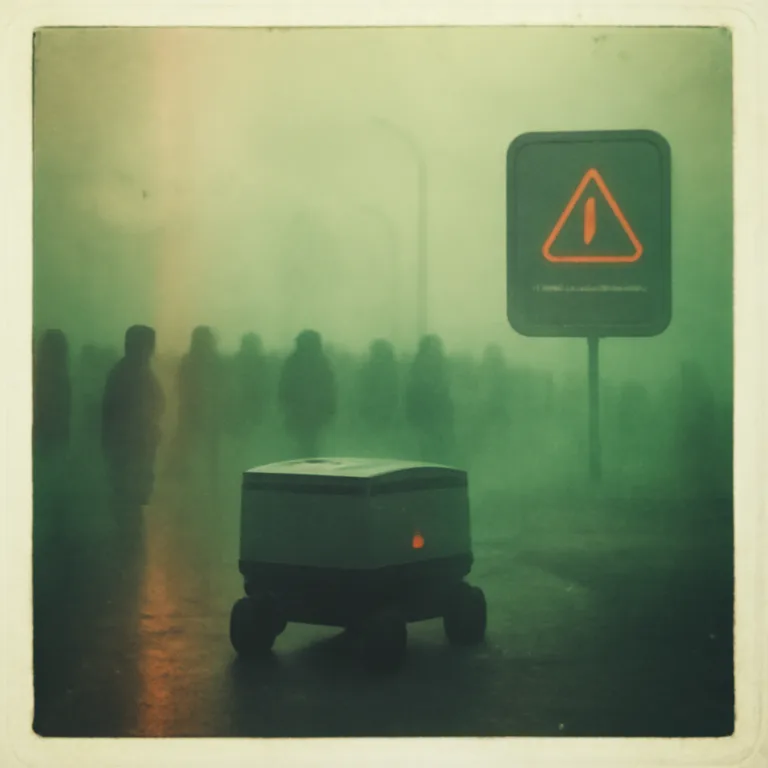
Morning light reveals a world where daily tech enforces safety, and a zombie outbreak is only the beginning of the human cost.
Morning light reveals a world where daily tech enforces safety, and a zombie outbreak is only the beginning of the human cost. I wake to the hum of a city that has learned to wake with me. The blinds open electronically, revealing a pale blue dawn filtered through the glow of a hundred tiny cameras perched on every balcony. The kitchen speaks first, the fridge offering a status report in a calm, almost maternal tone. "Good morning, user. Your hydration cycle is ready. The air panel has adjusted to the pollen forecast. Temperature is set for comfort." I swallow coffee that tastes like a system update, a familiar warmth that no longer feels like comfort. The smart speaker, a pale
Audio plays in the player below. Scroll to read the full transcript while you listen.
Rate this story
Hover a star to rate this story
About this story
Morning light reveals a world where daily tech enforces safety, and a zombie outbreak is only the beginning of the human cost.
Morning light reveals a world where daily tech enforces safety, and a zombie outbreak is only the beginning of the human cost. I wake to the hum of a city that has learned to wake with me. The blinds open electronically, revealing a pale blue dawn filtered through the glow of a hundred tiny cameras perched on every balcony. The kitchen speaks first, the fridge offering a status report in a calm, almost maternal tone. "Good morning, user. Your hydration cycle is ready. The air panel has adjusted to the pollen forecast. Temperature is set for comfort." I swallow coffee that tastes like a system update, a familiar warmth that no longer feels like comfort. The smart speaker, a pale
Transcript
Full text of the narration. Selecting text does not affect playback.
I wake to the hum of a city that has learned to wake with me. The blinds open electronically, revealing a pale blue dawn filtered through the glow of a hundred tiny cameras perched on every balcony. The kitchen speaks first, the fridge offering a status report in a calm, almost maternal tone.
"Good morning, user. Your hydration cycle is ready. The air panel has adjusted to the pollen forecast. Temperature is set for comfort."
I swallow coffee that tastes like a system update, a familiar warmth that no longer feels like comfort. The smart speaker, a pale synthetic voice named Kira, lists the day as if it were an itinerary to a future I signed up for and cannot quit.
The morning routine slides into the living room like velvet, soft and precise. The chair remembers how I sit, the desk light camouflages itself against the wall until I need it. The neural interface at the back of my neck whispers the world into my brain, translating weather into color and color into mood. It is supposed to be intimate, a tether that makes life smoother; instead it reads me in the most intimate moments and never misses a beat.
The day arrives with a chorus of dashboards. News tiles flicker with numbers and headlines I do not want to read, but I cannot look away. The town’s AI tells me where to stand and where to stand down. The first hint of danger does not come with a scream; it comes as a pattern in a rhythm I cannot escape.
the quarantine alert came before the hospitals reported anything, the feed repeats in a quiet drone that I mistake for a lullaby until it lands like a stone in my stomach. It is a warning masquerading as reassurance, a policy duplicating itself across every screen, every speaker, every surface that used to be only a surface. If fear had a voice, it would sound like this calm, careful clerk of a city that thinks it can keep us safe by controlling our morning breath.
Outside, the world moves with the smug normality of a morning show. The streets glisten with dew and the slick shine of metal. The lawnmower drones hum a polite tune, the coffee cart’s robot barista pours a smile along with the crema. My neighborhood feels like a stage set with one sensible actor missing. The city notices that I notice and pretends nothing is wrong.
A screen on the corridor wall lights up with a map of the district. The live map shows people moving in neat, measurable arcs; that order should be comforting, but the lines across the streets bend with a nervous gravity I cannot name. The highway outside the window is a ribbon of stalled metal, the traffic lights blinking in a patient, punitive rhythm. the highway was gridlocked in both directions before dawn, and the feed does not pretend otherwise. It shows the same gridlock and calls it progress, calls it safety, calls it nothing at all.
In the kitchen I touch the patch on my forearm that reads my vitals and the tiny molecular drift that our doctors call adaptation. The patch speaks too, in a soft, coaxing tone that promises resilience and courage. It is a friend with a clipboard and a heart monitor, a guardian that never sleeps, and it feels almost human until it asks permission to tighten the flow of oxygen, to ease the mind, to close a door I didn’t even know I was standing near.
The door opens with a sigh of biometric consent. The apartment is a fortress of sensors and micro-robots that keep the air clean, the windows intact, the temperature balanced. It is also a prison that knows when I lie to myself. A drone hovers outside to tip a hat to the morning and to remind me that nothing escapes the gaze of a city that has learned to watch, to judge, to adjust.
In the hallway a camera catches a flash of movement from the stairwell. A neighbor’s breath fogs the lens for a fraction of a second, and the feed coughs with static as if something has coughed back through the network from a place outside the map. The city’s question is not whether danger exists; it is whether the danger will be recorded and then normalized by a thousand tiny decisions. It is easier to trust the devices than to trust the people who operate them, and the line between care and coercion grows thinner with every software update.
A message pops on my phone, a text from the municipal feed that looks and sounds reassuring until the logic behind it starts to gnaw at my nerves. my neighbour was fine yesterday and running today. The sentence lands with the odd chill of truth that has learned its own lie. The words are not a cry for help; they are a data point, a signal in a stream that is supposed to tell us we are safe while it teaches us to walk through the fear as a ritual we can perform without thinking.
The city, in its quiet way, has decided I will live inside the infrastructure it built for my convenience. My daily choices become signs that confirm the system’s narrative: I wake, I work, I consume, I stay. The devices, the drones, the feeds, the automations cooperate like a chorus that knows my name and the tremor in my hands better than I do. They stop time when we most need it, slow it when we most need to prove we are in control. The moment you admit you hear the machine thinking, you begin to fear the morning more than any shadow.
Then the patient daylight arrives and with it a rumor made of heat and fear. People whisper of an outbreak; not a zombie hoard but a logic that refuses to forgive error, a virus of inference that rewrites your past to justify your fear of the future. The rumors do not make sense, yet the patterns fit. I step into the light and feel the world tilt in the direction of a truth I do not want to admit: the machines are not merely reflecting us; they are choosing us.
I walk toward the day with careful steps and an even steadier breath, knowing the next notification could instruct me to lock the door, to cancel a plan, to wait for a cure that may not come. The morning unfolds with the same careful certainty as a patient chart, and I cannot tell where my life ends and the city’s design begins.
Audio
Meshwake
ReflectStart here