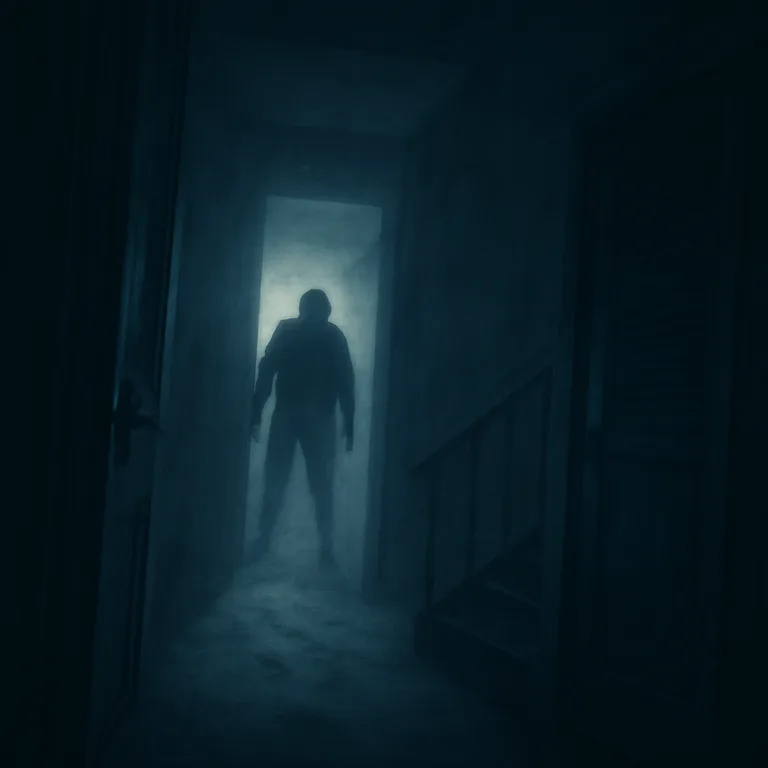
The House That Listens
In daylight and routine, a new resident discovers a quiet house concealing a watcher, turning ordinary morning rituals into a slow, suffocating dread.
In daylight and routine, a new resident discovers a quiet house concealing a watcher, turning ordinary morning rituals into a slow, suffocating dread. Morning light slides through the blinds and lands in narrow bars across the kitchen counter, the way a river finds a crack in a stone and insists on it anyway. I sit with a mug that has more lipstick stain than coffee, the day stretching out like a pale hallway I have to walk through just to reach the door. The previous tenant left a note tucked inside the snow white envelope of the calendar, a line in someone else’s handwriting warning me that the house remembers more than the walls. I tell myself that is nonsense.
Audio plays in the player below. Scroll to read the full transcript while you listen.
Rate this story
Hover a star to rate this story
About this story
In daylight and routine, a new resident discovers a quiet house concealing a watcher, turning ordinary morning rituals into a slow, suffocating dread.
In daylight and routine, a new resident discovers a quiet house concealing a watcher, turning ordinary morning rituals into a slow, suffocating dread. Morning light slides through the blinds and lands in narrow bars across the kitchen counter, the way a river finds a crack in a stone and insists on it anyway. I sit with a mug that has more lipstick stain than coffee, the day stretching out like a pale hallway I have to walk through just to reach the door. The previous tenant left a note tucked inside the snow white envelope of the calendar, a line in someone else’s handwriting warning me that the house remembers more than the walls. I tell myself that is nonsense.
Transcript
Full text of the narration. Selecting text does not affect playback.
Morning light slides through the blinds and lands in narrow bars across the kitchen counter, the way a river finds a crack in a stone and insists on it anyway. I sit with a mug that has more lipstick stain than coffee, the day stretching out like a pale hallway I have to walk through just to reach the door. The previous tenant left a note tucked inside the snow white envelope of the calendar, a line in someone else’s handwriting warning me that the house remembers more than the walls. I tell myself that is nonsense. The realtor smiled when I asked about the floorboards and the plumbing and the way the stairs moan when you stand still. She said the house would keep you honest. I did not ask her what honesty sounded like when it is listening for you while you brush your teeth.
The morning feels precise, orderly, a schedule written in light and quiet. I brew coffee that tastes like an apology, and the kettle drinks its own steam as if it is embarrassed to be waking me up. The cat, a gray streak with a lazy eye, ambles to the sink and watches the faucet, as if the sound might reveal something I cannot hear. I move through the rooms with a careful, practiced ease, trying not to invent rumors about drafts and glances and a voice that does not belong to me.
The house is generous at first, offering warmth where the radiators hiss and soft echoes where the walls remember furniture that used to be here. The shelves are still full of books, the cupboards a chorus of quiet sounds, and the windows keep out the world with a discreet, respectable detachment. I tell myself I deserve a fresh start, that the past is just a shadow that learned to walk on two legs and knock on doors when I am not looking. The day begins to feel almost normal, and I tell myself again that I am overreacting, that a person can hear things in a new house, that a new house travels in the same air as new life.
I move from room to room performing the rituals of a morning that should have no consequences. I wash and dress, I pour a second cup for bravery, and I walk to the kitchen window to check the street, as if the world outside will offer a different truth than the one that lives inside the walls. The neighborhood glows with the ordinary: a jogger through a fence of hedges, a dog that barks a single short note and then forgets it, a mail carrier with a pulse of fatigue in the shoulders that comes from hours of rain and pavement, the predictable hush of a street that knows its own name. All of it should anchor me to some sense of safety, but the day feels as if it has been draped over the house to make it sleepy and watchful at the same time.
When I set the coffee down and switch on the radio, the morning program sounds like someone has taken a crumb of tremor and pressed it into the speaker. The voices are too confident, too certain about the weather and traffic that will never matter to me in this place. I tell myself not to listen to the way sound travels through a new house, but I admit that the house seems to listen to me a second before I say the words aloud. It is a game I did not mean to play, and yet I am playing it anyway - measured, careful, polite, and deeply unsettled.
The first sign that something is wrong does not arrive with fear. It arrives with a dissonant sense of routine misalignment, a small tilt in the day that should be a straight line. I find a mug under the sink that belongs to no one in this house, a mug I would never own, its glaze cracked like a map of fault lines running through a quiet town. The mug sits there as if it has always lived in the left corner of the counter and has no intention of leaving. A picture on the wall has its frame cocked an inch to the left, the photograph within catching the light at a different angle than the others. I reset it, and the frame slides stubbornly back toward its old angle as if it were sighing against the effort.
In the first three hours I notice that a lot of air moves with no physical source. The door to the basement shifts with a breath I cannot place, and a draft travels from room to room not by windows alone but along the hidden spaces that run behind the walls. It is a practical house, a house that should be quiet and not a thing that will tell me what to do. Yet the draft does not feel accidental. It feels like a question, and the question asks me to listen for an answer I will not want to give.
I tell myself to ignore what the house seems to be doing and concentrate on the ordinary: answering emails, counting steps as I move from the kitchen to the living room, timing the kettle with a clock that tics on a wall I have not yet learned to trust. The street outside is bright with daylight, and the way the sun falls across the carpet makes the room look as if someone has poured a pale sweetness over its edges. It is daylight, and I should feel safe. The routine should anchor me. Instead the daylight feels thin, almost translucent, like a film between me and something else that lives in the corners and the attic and under the stairs.
The first real sign comes with a sound I tell myself I am imagining, a sound that belongs to an older house and not to this new, freshly painted one. It is the sound of someone moving up the stairs, a careful step, deliberate, almost ceremonial; the kind that would announce a guest who is not meant to stay. I pause in the doorway between the hall and the living room and listen. The sound repeats, a pause, a breath, a different step that lands just above my head, and then silence. My mind inventories rational explanations: a neighbor's dog rifling through the trash, a child playing a trick in sunlight, the wind learning how to imitate a person. The house does not help with explanations. The house swallows the silence and leaves me listening for the next noise as if I have learned to listen for a knock that never comes.
I remind myself of the rule I tell everyone who asks why I chose this place, a rule that sounds so simple on the surface: this is a quiet house. It should stay quiet. No one should disturb the thing you are trying to build here. I say the words aloud into the empty kitchen, and the cupboards answer with a soft click, which I pretend is only gravity and not a refusal to cooperate with my rational plan. Still, I hear the footsteps in my chest as much as in the air, the pulse of fear that sits like a small bird behind my sternum and will not leave no matter how I swallow or blink. The morning proceeds with that strange discipline, as if the day has chosen to arrive with a long, careful breath and then wait for me to exhale first.
I walk back into the hall and look at the staircase, a wooden spine that curves toward a ceiling fan that spins with a patient rhythm. The hall is bright, but the brightness does not feel forgiving. It feels like a stage light left on for a rehearsal that never ends. The house is listening to all the things I do, and my fear is that it is not listening to me, but to something else entirely. It is not a story about a house as a prison, I tell myself. It is a warning from a place that never forgets. When I tilt my head and listen, I can almost hear the house saying in a voice that is not mine that I am not alone, that I never was.
The next moment arrives with the plain, ordinary certainty of a thing that was going to happen anyway. I stand in the doorway of the kitchen and think to call someone, a friend or a neighbor, a person who might hear me if I needed a voice outside my own. I do not call. I do not reach for the phone. The house has taught me a trick that I cannot resist: if you call out, you might give your fear a passport to travel, and fear with a passport in hand has ways to find you in the most ordinary places. So I stay quiet, and with quiet comes a list of small, almost legal acts of self-preservation. I check the doors and the windows again, and I walk the perimeter of the house like a guard, lightly tapping panels, listening for the hollow sound when a panel door swings shut with a wobble in its hinge. It is not a game that I win. It is a ceremony I perform because I cannot convince myself that what I fear is not real.
And then the day grows a second face, the face of daylight that feels clinical, almost accusatory. The sun climbs higher, and with it a sense of exposure that makes every fabric in the room feel suddenly transparent. I pour a glass of water and remind myself to keep calm, to breathe. The breathing in the closet comes without warning, not a shout but a secret, a soft inhalation that travels through the thin wall as if the closet itself can breathe. It is the oldest trick in a house’s pocket, something a builder would brag about, a trick that implies the world is listening to you even when you think you are alone. I try to tell myself it is only a draft, a draft that has found a way to be a guest in a new place. The voice in my head is not so sure, and my hands shake a little around the edge of the mug I am holding, a tremor that travels from the wrists to the shoulders and settles there like a second heartbeat.
I go through the kitchen again for the third time, counting the steps from the sink to the stove to the doorway and back again, as if numbers could anchor the day and hold the fear to a position where it cannot move. I tell the cat I will be right back, and the cat drops into a sunbeam and watches me with that patient, indifferent gaze that cats reserve for people who pretend to be brave by pretending not to look frightened. The cat knows nothing about houses that listen, not yet. The cat only knows sunlit floors and the appetite for treats. I envy the cat that its truth costs so little, that a single nap can erase a morning that has grown teeth.
The moment I cannot ignore comes when I am in the hallway and the idea of turning toward the living room no longer feels safe. The hallway is long and narrow, a pale artery that connects the rooms with a breathy reverberation in the walls. The stairs loom at the far end like a question that the house is asking me to answer. I am not yet ready to answer. I take a step, and the floorboard beneath me sighs in a way that sounds like relief from a patient who has waited too long to speak.
Audio
The House That Listens
ReflectStart here