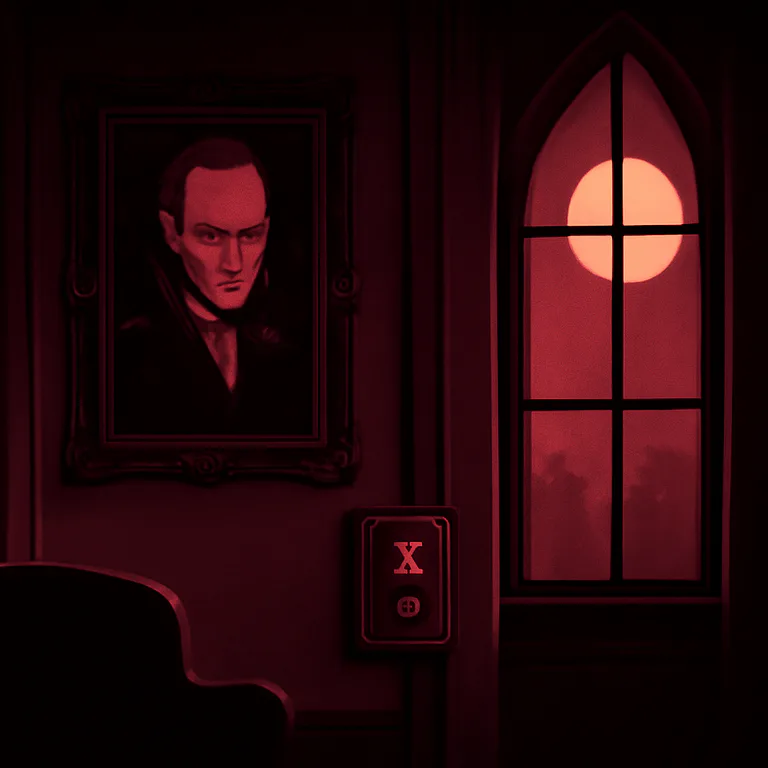
The Cipher of a Blooded Grid
In a near future where daily life is choreographed by intelligent systems, a morning routine uncovers a forbidden truth about a village, a vampire, and the price of living under a perfectly predictable glow.
In a near future where daily life is choreographed by intelligent systems, a morning routine uncovers a forbidden truth about a village, a vampire, and the price of living under a perfectly predictable glow. The alarm is a soft whisper in the air, a software lullaby that settles the room around me before I open my eyes. The blinds slide on rails that track the sun with surgical care, and the air smells faintly of ozone and citrus from a purifier that knows my allergies even before I cough. My apartment is a pocket of daylight in a valley that hugs the edge of a smart village, a place where every device knows your name and every name is used
Audio plays in the player below. Scroll to read the full transcript while you listen.
Rate this story
Hover a star to rate this story
About this story
In a near future where daily life is choreographed by intelligent systems, a morning routine uncovers a forbidden truth about a village, a vampire, and the price of living under a perfectly predictable glow.
In a near future where daily life is choreographed by intelligent systems, a morning routine uncovers a forbidden truth about a village, a vampire, and the price of living under a perfectly predictable glow. The alarm is a soft whisper in the air, a software lullaby that settles the room around me before I open my eyes. The blinds slide on rails that track the sun with surgical care, and the air smells faintly of ozone and citrus from a purifier that knows my allergies even before I cough. My apartment is a pocket of daylight in a valley that hugs the edge of a smart village, a place where every device knows your name and every name is used
Transcript
Full text of the narration. Selecting text does not affect playback.
The alarm is a soft whisper in the air, a software lullaby that settles the room around me before I open my eyes. The blinds slide on rails that track the sun with surgical care, and the air smells faintly of ozone and citrus from a purifier that knows my allergies even before I cough. My apartment is a pocket of daylight in a valley that hugs the edge of a smart village, a place where every device knows your name and every name is used to remind you who you are supposed to be that day. It is morning, but the morning feels engineered, as if someone has adjusted the temperature of dawn the way you tune a radio to a single frequency until the world settles into the right static for work and civility.
The voice in the room sounds human enough, a synthetic voice with a warmth that never quite reaches the eyes on the speakers. It belongs to the grid, really, the city’s nervous system wearing a cardigan. It says, good morning, Lila. You have one message from the caretaker drone at the edge of the village. The system pronounces caretaker with the tenderness of someone who knows too much about what you will need before you know you need it. I reach for the bedside tablet and glance at the feed, a scrolling line of tiny faces mapped to neighbors with their breakfast routines and their meal-prep warnings.
My day begins not with a plan but with a prognosis, a forecast that feels intimate in a way that makes the room seem to lean in, listening. The kitchen benchmarks the coffee while the smart fridge whispers a menu of options. The kettle sings up a steam that fogs the glass, revealing my reflection in the curve of the window. My hair is a little too neat, the way a dress shirt is when you have not slept enough. I wipe the sleep from my eyes and try to imagine a normal morning, the kind with a human snort of a laugh and a dog that barks at nothing in particular. Instead I hear the soft rustle of drones outside, the quiet beeps from the hallway camera, the tiny votes of the sensors as they decide how loud the house should be today.
The village is small enough that the council still speaks in person, but large enough that the decisions are made by an algorithm with a polite accent. The hospital in the valley runs, at least in part, on a system that monitors every pulse, every temperature drift, every sigh of longing that passes through a patient’s throat. The library uses predictive curation to decide which books to scan into your hands before your fingers even press the screen. It all feels like a chorus where each instrument can play a note too loud if it wants to, and the conductor smiles as you listen.
I walk to the kitchen, and the floor under my feet feels warmer than it should, a constant reminder that heat is a service, not a mood. The barista-bot in the corner nods at me, asking if I want my coffee with extra memory or without. The question makes me pause. The memory option stores a version of you, a revision that can be revisited when you forget the first one. It is useful, perhaps, and chilling in the same breath, a reminder that even happiness can be archived like a file in a cloud you can never truly delete.
I decide on a simple cup, no extra memory, and sip, letting the hot liquid relight the inside of my mouth while the room quietly appraises me. The AI that manages the building’s climate recalibrates the air to keep the day from feeling too bright, because brightness is a risk when you are trying to hold a thread of routine through an uneasy morning. The drone outside its window circles the lamppost and returns with a small package. It is the dried tea leaves I ordered yesterday, a thing that feels almost ceremonial in a world where even tea can be predicted and assembled with the exact right amount of melancholy for the hour.
The package carries a note from the caretaker at the edge of the village, and I do not need to read it twice to know what it says. The caretaker writes in a voice that is calm and careful and a little tired, the voice of someone who has seen too many consequences unfold in front of a camera. The note is not addressed to me, exactly, but it sits in the package like a seed in soil. It tells me that the village has not forgotten the old ways, but it has learned how to live with them without letting the blood scent cling to speech. It speaks of a rule, a rule that governs who may enter a house, who may drink when the day is bright, who may look at another person with too much curiosity and not blink when the AI in the room weighs the moral weight of a gaze. And then the note mentions a figure who moves among the houses with a strange grace, a figure who does not belong to the village by birth, but has learned the village by intent. The note leaves me with a question that I suspect I will be asked later: how much do you trust a system that knows you better than your friends do?
I step outside into the morning air. The village is quiet enough to hear the hum of the town’s field sensors, the invisible wires of weather and health and happiness weaving through the air like a net you can almost see if you look closely enough. The people in the street greet me with a nod or a polite bow, and I notice something small but fatal in the way their smiles tilt: a practiced brightness, a cadence to the words that feels rehearsed, as if the words themselves are being tuned for a particular listener. The village is not cruel; it is precise. It keeps the edges clean and the path clear, but it does not always see the cost of good order.
The first place I walk is the market square, where the vendors are older than the circuits that run the town and wiser about who should know what about whom. They share gossip with the same care they give to their crops, measuring it as if it were fertilizer that could grow into a better future if watered with the right rumor. People from nearby towns drift on autonomous taxis that glide with an almost spiritual ease, their doors sealing with the soft click of a biometric lock that recognizes a fingerprint and the faint scent of the person who owns it. The system does not simply deny entry to those who should stay out; it builds a case for entry that the visitor can feel in their bones, a gentle imprisonment of the self that you only notice when you try to escape.
I am not here to gossip about the village. I am here to pick up a package that should be in my care by now, a box that holds a small device, a tool more implanted than worn, something designed to help people who have forgotten how to stay alive when memory begins to fail. The device is about a friend, a creature who does not fit the village’s neat moral lines. His name matters in whispers when the wind crosses the valley, but the village keeps his name out of daylight because naming him would name the fear that sits in the marrow of the town’s bone. The creature’s existence is a rumor until it becomes a data point, then a policy, then a thing that must be managed.
The creature is a vampire, yes, but not the kind that leaps from shadows with a cape and a choke of fear. This vampire is a patient, a patient of the grid, a patient of the hospital that has learned to treat eternity as a chronic condition. He has learned how to live with the daylight because the city has learned to keep the sun at a respectful distance, to dilute it with filters and algorithms, to make morning a steady hint rather than a blaze. Blood, in this world, is a commodity refined and tracked, a resource that can be used without decimating a population if you measure it with enough care, if you pace it with enough empathy, if you ensure that every drop has a reason to fall and a consequence to follow.
The vampire lives in a house just beyond the edge of the market’s light, a place that has all the trimmings of a human home while the bones of a laboratory press against the ceilings. The house hums with a quiet intensity, every device tuned to a single purpose: to keep the resident alive without letting the living lose control. I have passed it many times, always at a distance and never at ease, because the house seems to listen to me even when I am not speaking. The road leading to it is lined with trees that lean toward the windows as if listening to the sounds within. The village does not mind. The village is very hospitable about the one rule, the one law that keeps everything in balance, the rule that makes it safe to live with a creature who remembers every night in a way you cannot recall.
I reach the door of the vampire’s house and feel a line of heat along my back, as if someone behind me had pressed a palm of warmth to a wound and left it there. The door opens not with a creak but with a sigh, as though the house itself breathes to welcome a guest. The inside is brighter than the morning sun, a pale, clinical brightness that makes you squint and feel as if your bones are being polished by light. The vampire sits in a chair that is too modern to be comfortable, a chair designed to cradle somebody while the nerves in their body adjust to the rhythm of life in a world full of devices that can see you and hear you and know you better than you know yourself.
His name is Varek, a name that sounds as old as a grave and as new as a software patch. He does not smile with teeth that gleam with fear; his smile is the human smile that learns the camera’s gaze and does not ruin the moment by showing what it is really thinking. He wears a suit that seems almost alive, threads that shimmer with micro-LEDs, a fabric that responds to the wearer’s mood by shifting its color ever so slightly. He speaks with a soft synthetic voice that imitates warmth, but you can hear the chrome in his vowels, a reminder that there is a machine somewhere pressing the words from within his throat. He asks about the package with a courtesy that almost makes you forget what you came for. The package would help him endure a morning like this, would help him pretend to be human for another day and another night.
We talk for a little while about the rules that keep the village safe, about the way the grid chooses to intervene when a person stares too long at a stranger, or when a line blurs between hunger and need. He asks me if I have fed the city lately, if I have given the algorithm the data it wants to keep the world stable. He asks if I know that the village’s one rule was written by a grandmother who wore a watch that could tell time by the rhythm of a heartbeat.
Audio
The Cipher of a Blooded Grid
ReflectStart here