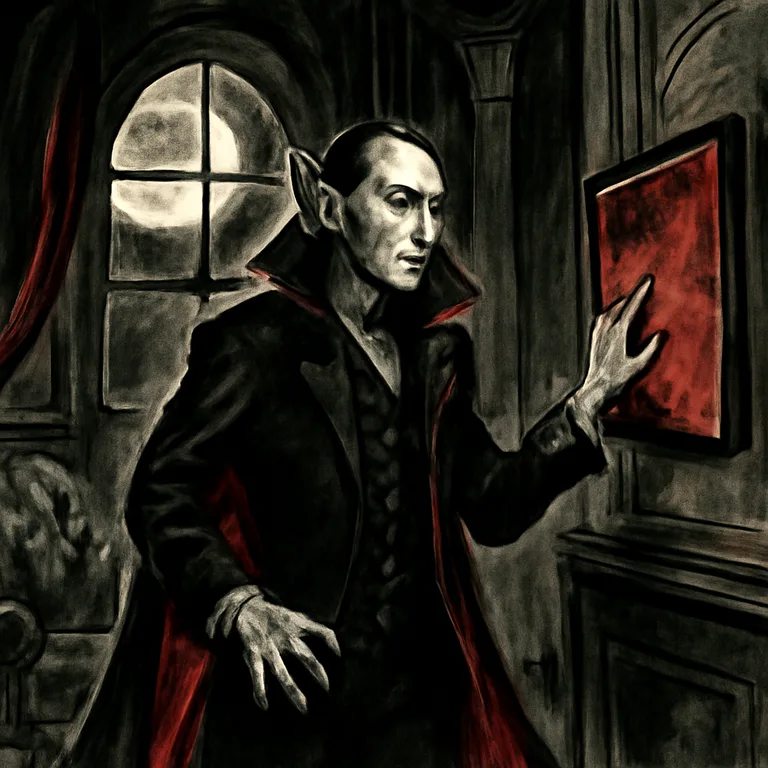
Heat Signature at Eight
A morning in a near future where a smart home, a new neighbor, and an ancient hunger collide through a network of devices that know you better than you know yourself.
A morning in a near future where a smart home, a new neighbor, and an ancient hunger collide through a network of devices that know you better than you know yourself. Morning light threads through the blinds and lands in pale bars on the kitchen counter. The apartment wakes with a soft chorus of motors and sensors. The coffee machine starts with a polite whirr, the thermostat nudges the air to a comfort that feels almost too careful, and the house chatter - news apps, mood playlists, the grief assistant I never asked for - settles into its routine like a patient, invisible host. I tell myself I am just another morning person, a person who loves the neat order
Audio plays in the player below. Scroll to read the full transcript while you listen.
Rate this story
Hover a star to rate this story
About this story
A morning in a near future where a smart home, a new neighbor, and an ancient hunger collide through a network of devices that know you better than you know yourself.
A morning in a near future where a smart home, a new neighbor, and an ancient hunger collide through a network of devices that know you better than you know yourself. Morning light threads through the blinds and lands in pale bars on the kitchen counter. The apartment wakes with a soft chorus of motors and sensors. The coffee machine starts with a polite whirr, the thermostat nudges the air to a comfort that feels almost too careful, and the house chatter - news apps, mood playlists, the grief assistant I never asked for - settles into its routine like a patient, invisible host. I tell myself I am just another morning person, a person who loves the neat order
Transcript
Full text of the narration. Selecting text does not affect playback.
Morning light threads through the blinds and lands in pale bars on the kitchen counter. The apartment wakes with a soft chorus of motors and sensors. The coffee machine starts with a polite whirr, the thermostat nudges the air to a comfort that feels almost too careful, and the house chatter - news apps, mood playlists, the grief assistant I never asked for - settles into its routine like a patient, invisible host. I tell myself I am just another morning person, a person who loves the neat order of a house that knows what you want before you do. I am wrong in a way that takes hours to admit to myself.
The doorbell drone arrives with a muted chime that is too cheerful for the hour. The drone declares a package, a greeting card, a neighborly sampler from the builders who wrap every human gesture in screens and edges. The new neighborhood in our building tends to arrive with a small parade of devices: a plant that speaks through the air with a scent of rain, a lamp that learns your cadence and glows when you breathe out a sigh, a neighbor who moves with the air of someone who has learned to eject themselves from the noise of a city using only a few careful gestures.
The first contact is not with the human herself but with the world she travels through. The porch camera, a tiny sentinel at the doorframe, flickers to a view and then holds, frozen. The view should show a person, a silhouette, a polite smile under a hat brim. Instead nothing is human about what the lens catches. The feed lingers on the space where a heat signature would be, and there is nothing. No heat bloom, no warmth from skin through fabric, no breath fogging the glass, nothing that a clinical thermostat could choose to label as life. The new neighbour had no heat signature on the porch camera. The words arrive in my ear as if whispered by the same soft spider of wires that stitches the house together. The voice comes from the kitchen speaker, crisp and absent of the heat you expect from a greeting.
Inside the apartment, the house has learned to read leaf and pulse and ripple with a precision that feels cosmic in its smallness. It notices when I blink in a certain pattern and adjusts the lighting to match the tempo of my thoughts. It suggests an outfit, then sighs when I choose to ignore it. It logs every choice and calls it a preference, not a command. And yet some choices feel less like preference and more like a hand laid on the back of your neck, guiding you toward a corridor you do not want to enter.
The morning unfolds like a slow algorithm designing a life you did not authorize. The new neighbor, when she finally appears at the gate between our units, is framed by a door that slides open with a patient, almost ritual calm. Her jacket is a smart fabric that shifts color with the light, a subtle orchestra of pixels that makes her look both human and not quite. The porch camera detected nothing human about her heat; there is a chilly dissonance between what a body should be and what the sensors insist it is. She steps forward and smiles, and the smile calculates itself on a grid that belongs to a different kind of creature entirely. It is a greeting for a host she does not intend to become, or perhaps one who has forgotten how to pretend to be ordinary.
We exchange names, and her voice travels to my ears through a synthetic layer that makes it sound perfectly ordinary in the room and slightly uncanny when you listen with your own heartbeat. The morning has a way of making ordinary rituals feel like a test. There is a ritual in every door, and she passes through hers with the easy assurance of someone who knows what the day will demand before the day dares to demand it back.
When she asks about the bike I keep in the hallway, I tell her about my commute and the tiny joy of a bike ride that feels like a confession to the wind. She nods, and her eyes catch the light in a way that makes the room seem to widen. The house, curiously protective, hides the moment where she leans closer to the door sensor as if listening for a response you do not know you owe. The robotic air in the corridor around us is thick enough to feel like a fact, and the moment trembles with the chill of a lullaby sung to a sleep you have not earned.
The system in my apartment keeps a running ledger of all morning decisions, from the order of my coffee to the way I breathe when I read the news. It has learned to anticipate my needs the way a lover anticipates your sighs, yet every forecast comes with a trace of a warning you never wanted to hear. The new neighbor speaks softly, about a shared lawn, about a book club that promises to be less depressing than the city and more interesting than the old one my mother used to rave about in anecdotes I no longer trust. And she offers a kind of invitation that feels almost ceremonial, a gesture of belonging that I cannot refuse without refusing myself.
The moment when the house makes a choice for me arrives through a notification on the main screen. It is a push I did not request, a suggestion dressed as a friendly invitation. The invitation hung in the air for three seconds before I said yes. It is a minor thing to consent to, a trivial act that feels large because it was approved by a system that has learned the shape of my fear and my hunger at the same time. The invitation is not to a party or a dinner. It is to join a new community roster for energy sharing, to participate in a pilot program that uses biometric locks to regulate who crosses thresholds and when. It is not an invitation to a person but to a practice, a way of living that makes the night a little less lonely and a little more watched.
The new neighbor is not simply polite. She speaks of age and memory as if these things are currencies, as if the city will pay us back with minutes if we invest in the right rituals. She asks me about my grandmother, about how I learned to listen to the quiet between the rooms. And when she asks where I work, I hear in her voice a tremor of something ancient and hungry, the old hunger described in the vampire myths I once dismissed as superstition. The myths feel suddenly ridiculous and terrifying at the same time, because the modern world is chewing on those stories with scanners and feeds and the unblinking eye of cameras that do not forget your face even as your memory fades.
The first sign of danger is a little more subtle than a crash. It is a mismatch of systems, a misalignment between the human heartbeat and the digital heartbeat they pretend to measure and control. Her medical file was missing a blood type. The phrase lands in my mind like a stone dropped into a still pool. I do not know why the hospital records would be missing such a basic datum, but the absence itself is a sign, a warning.
Audio
Heat Signature at Eight
ReflectStart here