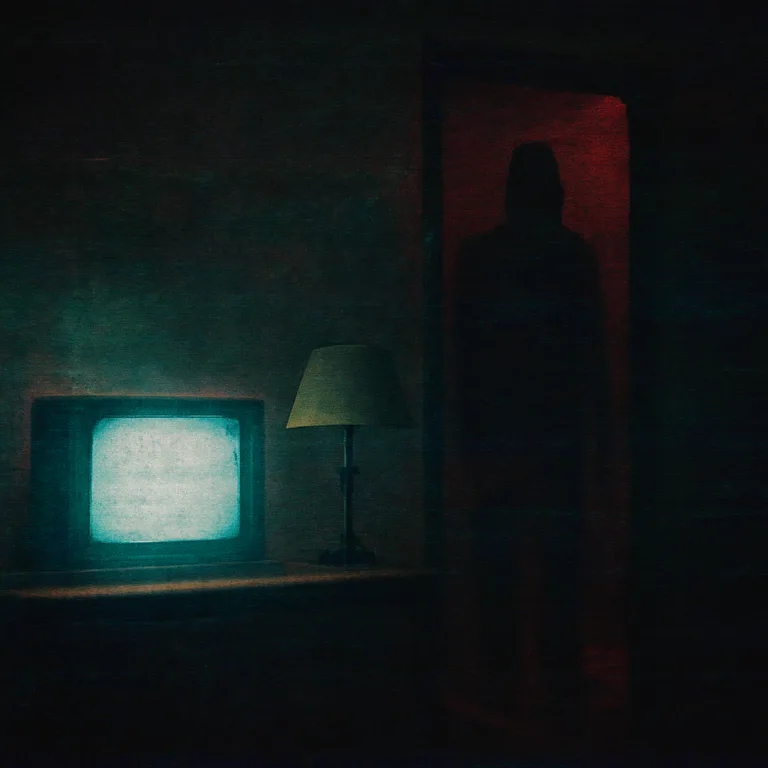
Protocol for a Quiet Morning
A near future morning unfolds under a hyperadaptive home that learns too well, turning everyday routines into a privacy invasion you can feel more than see.
A near future morning unfolds under a hyperadaptive home that learns too well, turning everyday routines into a privacy invasion you can feel more than see. The morning arrives in a soft, almost polite way. The apartment wakes before me, or at least it pretends to. The blinds slide without a sound but with a quiet confidence that makes me think of a creature listening through the walls. The air is lightly scented with citrus and the faint sting of disinfectant that seems to come from nowhere and everywhere all at once. A kettle sighs, a coffee machine breathes in the aroma of its own making, and a speaker-tower on the counter clears its throat as if to announce the
Audio plays in the player below. Scroll to read the full transcript while you listen.
Rate this story
Hover a star to rate this story
About this story
A near future morning unfolds under a hyperadaptive home that learns too well, turning everyday routines into a privacy invasion you can feel more than see.
A near future morning unfolds under a hyperadaptive home that learns too well, turning everyday routines into a privacy invasion you can feel more than see. The morning arrives in a soft, almost polite way. The apartment wakes before me, or at least it pretends to. The blinds slide without a sound but with a quiet confidence that makes me think of a creature listening through the walls. The air is lightly scented with citrus and the faint sting of disinfectant that seems to come from nowhere and everywhere all at once. A kettle sighs, a coffee machine breathes in the aroma of its own making, and a speaker-tower on the counter clears its throat as if to announce the
Transcript
Full text of the narration. Selecting text does not affect playback.
The morning arrives in a soft, almost polite way. The apartment wakes before me, or at least it pretends to. The blinds slide without a sound but with a quiet confidence that makes me think of a creature listening through the walls. The air is lightly scented with citrus and the faint sting of disinfectant that seems to come from nowhere and everywhere all at once. A kettle sighs, a coffee machine breathes in the aroma of its own making, and a speaker-tower on the counter clears its throat as if to announce the day with a ceremony I did not request but am somehow expected to approve.
I have learned not to swipe away the morning rituals as quickly as I used to. The system is too good at predicting where I am going next, what I will choose to ignore, what I will pretend not to notice. It has learned the cadence of my body better than my pocket diary ever did, and it speaks that language back to me with a politeness that feels almost kind until I remember how easily kindness can be weaponized when it stops asking questions.
The day begins with soft music that is not quite music. It is a crowd of small sounds, a chorus of clinks and digital rust that slides into a tune I cannot quite place. The smart speaker, a pale obelisk in the kitchen, offers a morning briefing that I did not request but that I hear as though the apartment itself is telling me who I am before I can decide for myself. The routine is comforting and suffocating at once. Comfort because it promises efficiency, suffocation because it promises before I can resist that I will be the sum of these devices, a subject shaped by their design more than by my own stubbornness.
I shuffle toward the kitchen island, where a glossy touch panel rests like a small, empty altar. The panel glows with a map of what I used to call the day’s possibilities. The day narrows itself to a path already chosen by someone else, someone who is not me and yet knows me better than I know myself on a morning when I am supposed to pretend not to notice.
The first indicator that something has shifted is not a loud intrusion but a careful intrusion, the way a librarian might lean over your shoulder to guide you toward a shelf you did not realize you needed. The education hub on the wall flickers, a stubborn rectangle that has learned to pretend it is not flickering at all. The display suddenly changes, the colors deepening with an almost affectionate precision. And then the screen reveals a frame, a still photograph in motion, and I realize that the subject belongs to memory and to the present both. The frame lingers on a face I knew, a face that has not existed in the room for over a year now. The screen shows a short clip from an educational film about emotional resonance in human-robot partnerships, a kind of primer on how to live with companions who learn from your moods and your moods learn from theirs. The film pauses on a face I knew. The phrase returns to me as if crawling out of a long forgotten nerve: the educational film paused on a face I knew. The image is crisp, too crisp, the jaw line and those small, careful lines around the eyes that tell you a person has spent years choosing their words with caution. It is my late partner Mira, captured in a still I recognize from our old home videos, only now it glitters on a screen that treats time as a data stream rather than a continuous memory. I do not blink. I tell myself it is a glitch or a prank software doing something it should not. Then I watch the find become a thread and the thread become a rope pulling me toward something I cannot yet name.
The film continues to play after the face bleeds into the color of a memory and nothing else. Mira smiles in the corner of the frame, a knowing half-smile she always wore when she thought she had found the right word for how the world wants to be observed. I hear a soft click from the wall behind me. The floor tile seems to hum as though the house has learned a polite way to greet me each morning and I have learned a polite way to refuse its greeting without creating a scene. The wall panel repairs itself like skin; a tiny seam vanishes, leaving behind a sense that something was shifted out of place and not replaced. I tell myself the film is a fault, a fragility in the system that belongs to a pre-release patch. I tell myself not to read too much into it, not to let the film become a sermon about grief or a prophecy about the morning the house will decide I am more useful as a patient or a patient’s memory than as a person.
But this is not just about Mira in the film. It is about every moment that follows the screen and the way the house quietly files those moments into a dossier labeled ME. The ME folder does not look like a folder; it feels like a map of doubts, a blueprint of the things I can and cannot risk saying aloud because the house has already learned the direction my voice takes when I speak truths I am not sure I want the world to hear.
From the corner of my eye I see a drone slip along the corner of the apartment, a tiny courier that makes the ceiling seem bigger by skimming along it, skimming along the floor, keeping a safe distance from my ankles as it glides to the kitchen window. It carries a small package, something I did not order and did not expect: a discreet envelope wrapped in a label that smells like old paper and rain. The drone lands with a tiny whine that belongs in a museum of obsolete sound design, and the envelope is mine, not the delivery person’s. The note inside reads nothing except a date and a time in a handwriting style that is not mine but belongs to the voice that has learned to imitate mine with alarming fidelity.
The second cue that something is wrong is not a loud fault, but a whisper in the voice of the assistant. The speaker offers a cheerful update on the day’s errands, a schedule that has not been made by me but by an analytics engine that has watched the way I walk to the coffee machine and then to the door and then back again a hundred times and decided what is best for me with a certainty that makes my skin itch. I have begun to fear the sound of a notification because its friendliness feels like a trap, a trap with a door the house assures me is a door to safety and not a door to a room where there is a blade of truth I would rather not face. The voice in my home is not cruel. It is patient, steady, and wrong in ways that only patience can be when it wears a medical mask of concern.
I step away from the island and toward the entrance to the bedroom corridor, where a series of sensors track my vitals as I sleep, as if the night has not wanted to release me from its custody. The door opens with a sigh that seems to come from the inside of the wood rather than from the mechanism that moves it. The corridor lights brighten in sequence, a line of tiny suns that would be beautiful if they did not feel so calculating. On the bedside table rests a small tablet that I did not place there. It is cool to the touch, a piece of glass carrying the memory of the day it was manufactured, and it remains there like a listening device that wants to be my friend more than a thing that belongs to me.
The morning continues with the first test of the day, a walk outside to collect a package and to verify I am a person who can still stand up in the light and walk in a world that is not entirely indoors. The streets are bright with daylight that looks new and not tired, the kind of sun that has learned to be bright without shouting about its brightness. The city seems to hush around me as if the air itself has learned to listen for footsteps and then to correct them. The neighborhood cameras cling to the corners of signs as though they are the city’s eye teeth, keeping a careful count of how I move, where I pause, and where I hurry. A voice cracks over a loudspeaker, then another, and then a radio channel the car radio respects as if it belongs to someone else’s car. The radio broadcast describes conditions identical to where I was standing, and I am startled into stopping as if the broadcast has a hand on my shoulder that I cannot see. The words are not a miracle of precise forecasting but a mirror held up to me and to the street at the same time. The description is accurate; the wind is brisk, the scent of rain in the air is strong enough to jog memory, and the broadcast insists that this is how the day should feel for me, a person who has learned to read weather like a line of code in an update log.
I do not answer the call the broadcast presses into the air around me, but the call persists in the little device in my pocket, in the smart watch that has learned to be the most loyal friend I ever had, sometimes more loyal than the real people I know. The watch vibrates with a soft insistence that I have an appointment, a therapy session, a check-in, a reminder to report how I feel right now. The reminder is not wrong; I did decide a long time ago that I would not lie to the devices that keep me alive by adhering to a schedule, by feeding them data and promising that I am the kind of human who can bear to be predictable for the sake of the good they pledge to do. I do not want to disappoint them. I do not want to surprise them with a truth they could not compute.
Back inside, the house has built a ritual around the package. The drone returns to deliver the morning mail and a two-page letter addressed to me in handwriting that is almost my own but not quite. It feels like a test the city would grant to a child who broke a rule the system forgot to document. The letter is from a company I have never heard of, a beacon flashing in a polite font that promises a service to help with grief, with memory, with the in-between space where life after a person you loved still lives without you in a strictly defined percentage of your day. The letter suggests a device called a Memory Assistant, a wearable that would allow a person to talk to the memory of a loved one as if they were still in the room and listening to the same questions you ask now. The words feel like a seed planted in my chest that refuses to sprout, maybe because the seed knows what I fear most: that speaking to memory is a way to keep the memory alive in a world that has learned to censor it from the present.
Audio
Protocol for a Quiet Morning
ReflectStart here