Reel of Morning Names
A municipal film screening and the town's old emergency systems conspire to single out a person in daylight, turning routine civic care into a precise and irreversible ritual.
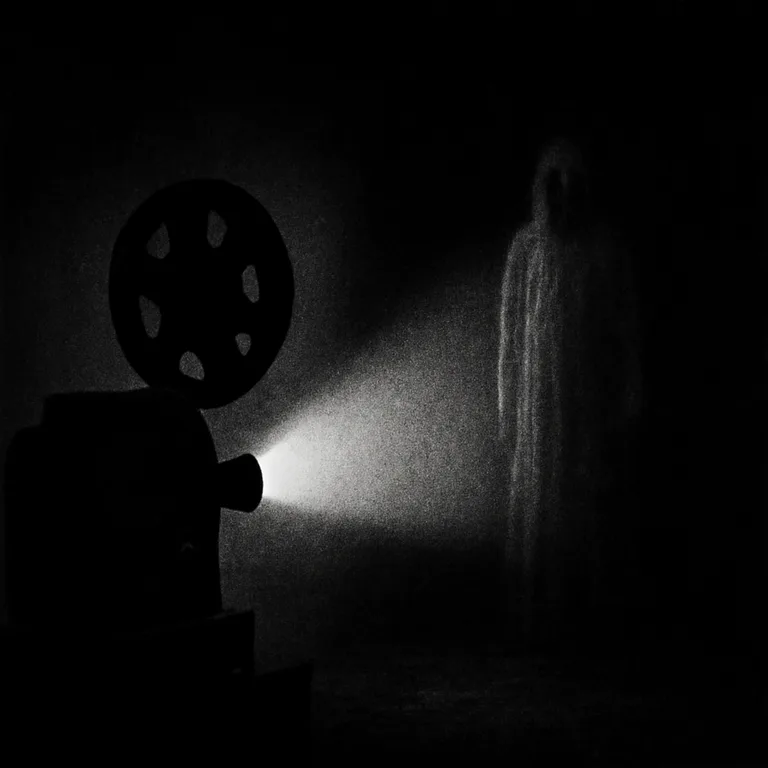
A municipal film screening and the town's old emergency systems conspire to single out a person in daylight, turning routine civic care into a precise and irreversible ritual. The projector coughed like a throat with sand in it. A rectangle of grain and light sat on the gym wall and would not move. I had been asked to run the morning screening twice a week. The school had kept an older schedule of civic films. They said the reels were community heritage. They said the bulbs were cheaper if we used them this way. I told myself all that as I wound the take-up reel by hand. Halfway through the shortest reel the film stopped. The sound hissed and then
Audio plays in the player below. Scroll to read the full transcript while you listen.
Rate this story
Hover a star to rate this story
About this story
A municipal film screening and the town's old emergency systems conspire to single out a person in daylight, turning routine civic care into a precise and irreversible ritual.
A municipal film screening and the town's old emergency systems conspire to single out a person in daylight, turning routine civic care into a precise and irreversible ritual. The projector coughed like a throat with sand in it. A rectangle of grain and light sat on the gym wall and would not move. I had been asked to run the morning screening twice a week. The school had kept an older schedule of civic films. They said the reels were community heritage. They said the bulbs were cheaper if we used them this way. I told myself all that as I wound the take-up reel by hand. Halfway through the shortest reel the film stopped. The sound hissed and then
Transcript
Full text of the narration. Selecting text does not affect playback.
The projector coughed like a throat with sand in it. A rectangle of grain and light sat on the gym wall and would not move.
I had been asked to run the morning screening twice a week. The school had kept an older schedule of civic films. They said the reels were community heritage. They said the bulbs were cheaper if we used them this way. I told myself all that as I wound the take-up reel by hand.
Halfway through the shortest reel the film stopped. The sound hissed and then nothing. The educational film paused on a face I knew.
It was a close shot. Grain and scratches but unmistakable. The cheekbones, the mole near the left eyebrow, the small scar on the inside lip. It was my sister Mara at twenty-two, the year before she left town. She had not been in any of the old civic reels. She had not been in anything we owned.
I could tell myself the projector misregistered, that the frame had been spliced. I could tell myself the obvious things and push the feeling down. I did not. The gym smelled like old varnish, lunch trays, and the coffee someone had set to warm. The light just past the gym windows was that washed-out blue you get on a clear morning in late October. Everything about that morning matched the frame on the wall.
I stood there with the crank in my hand and the silence stretching. Then the old radio on the wall filled the room.
It began as static and then a voice. Dry. The municipal station had a habit of looping volunteer announcers in the mornings. Those voices felt like strangers and family both. This voice spoke with a careful evenness. It named the town by the county line. It cataloged temperature and cloud cover in sentences that made me look at the ceiling light.
The radio broadcast described conditions identical to where I was standing. It said the gym was quiet. It said there was a rectangle of light on the north wall and a smell of coffee. It said the projector had stopped at frame three hundred and fourteen and that the image showed a face with a scar on the left lip. It said my sister's name.
I walked to the radio and thumbed its dial. The voice continued without pause. The town looped the morning broadcast from the same archived hour each day. We played it for senior centers and town watches. I had never heard it mention the present like this.
There was a tone that preceded the next sentence. It was a low pattern of notes that felt like an old mechanical watch settling. I had handled civil defense tones in a training once. They were boring sequences, public domain. Municipal sirens had standard intervals. You could look them up on the internet and print them on a sheet for training. This tone was not any of those.
The emergency alert used a tone that isn't in the FCC index. It was off-kilter. It rose in a pair, and then dove, and then it held on a tremolo that made the hairs along my arm stand up. The gym's fluorescent lights hummed in answer.
The voice said, in a different register, we are beginning selection. Please remain where you are. Please do not attempt to obstruct. The sound carried like it had been recorded in the room itself.
Two students came in late, backpacks slung. They sat in the bleachers and watched the face glow on the wall. One of them said, quietly, who is that? The voice on the radio answered with my sister's full name.
My hands were steady enough to wind the crank. My heart was not. Part of me wanted to run. The other part wanted to find where the reel had been spliced. I told the students to stay calm. I told myself the same.
The film, when it restarted, moved with a wrongness. It did not pick up the scene that had been playing. Instead it cut into other shots from the same film series. There were wide shots of town streets, color-shifted but recognizable. There were archival maps with thick black lines where highways had once been planned. And then it cut back to a close shot of a hand palm-up. The voice on the radio described the hand. It said there was a freckle near the wrist. It named the freckle's color.
The film had never held particular biddable magic before. It taught recycling, vaccination, how to tie a scarf. We used it for civics. Now the images were specific. They watched us back.
The first turn of wrongness was a recognition. The second turn was that the recognition was selective.
Once, in a college class, a professor told us that old film systems belied a kind of mechanical patience. Cameras could take a lifetime to reveal something. I had not understood what he meant until the projector began to show us different angles of the gym, as if a camera had been stitched into the old prints. There was a grainy shot of the north exit. The clock above the door read 8:17. The film then showed a hand on the door handle. The voice told us the texture of the paint on the handle. It told us the person who would touch it would have blue nail polish.
I looked at the students without thinking and saw the blue polish on one of their nails. She had been on the cross country team last year. She said nothing. Her face was pale.
The radio announced that the selection had accepted a host. It said the host would maintain morning fidelity. I asked, aloud, maintain what? The voice answered without preamble. Morning fidelity meant the preservation of a day's light and its associated civic duties. It said the town had always had a program, older than memory, to keep its mornings true. It said this had been dormant. It said it had woken.
You learn how rituals sound when you are under them. They are never as loud as you imagine. They are the small singsong of directions. They are footsteps and the ring of metal on wood. The film told the students to form a line. The radio repeated and said the line must be in order by age. Mouths moved without prompting. Students rose. The girl with blue polish took a step and the gym clock clicked forward by a minute.
The third turn of wrongness was the compliance. It was not immediate, but it was precise. The town's old systems had not simply pointed out. They had arranged.
I pulled at the projector to slow the film. The crank made a groaning sound and then slipped as if something on the inner spindle had seized. My fingers smelled like oil. I could feel the film pulse through the gate like a living thing. The face of Mara on the wall, the image from the reel, seemed to blink slowly.
Voice: "Selection will proceed. Identify available hosts. One per institution."
The radio named the library, the post office, the bakery. It named the places where mornings happened. The voice then named the school. It asked for volunteers or a present staff member to be selected. It said the selection would be gentle.
I had been on the payroll for three years. I had been the person who keyed the lights, who swept after the evening rehearsal, who made sure the projector lens was clean. I understood civic responsibility in the small ways it came to me. That morning responsibility was a hook. The sound of it sank into my ribs.
The students lined up by age. The radio asked for a person to volunteer from the staff. There was a silence that felt like a held breath. The bleachers squeaked. Someone laughed too loud. Someone's phone screen flared. The voice offered a list of consequences if the town failed to maintain morning fidelity.
There were pictures in the film now of streets and houses we knew. Then a slow pan across my childhood porch. My father's truck, but without its rust. The camera stopped on a window. Inside the window was a lamp. The lamp's shade was torn. The film knew that shade had been torn in the exact corner. The voice said that fidelity required continuity. The voice said continuity sometimes requires a witness.
The voice paused and the gym lights dimmed by their own electrical will. The emergency alert tone returned and it made my teeth ache. The students flinched. The radio said, we will begin with the staff. It said, availability must be confirmed by face.
The educational film paused on a face I knew.
This second time it was not my sister. It was a father with a laugh line I had traced as a child. It was an everyday face, and the hall of my memories jerked like a pulled curtain. Each stop of the film paired a face with a place. The radio wrote it down in speech. It said the face belonged to a person who had taken responsibility at one time or another. It said the host would be required to observe morning and narrate it into celluloid.
The rind of wrongness tightened. I thought of the archive room in the municipal building, boxes of labeled reels. I thought of the civil defense binder with paragraphs about continuity of government. I thought of the way the town had built redundancy across analog systems so that one could take over where another failed. Someone had written a manual long ago that allowed machines to choose. Those authors were dead. Their protocol had teeth now.
I tried to move, to cut the radio feed, to pull the projector out of its mount. My hands could not find purchase. The students moved in a kind of trance toward the line. One of them whispered, we should leave. Another said, but the clock. The clock above the door now read 8:22.
The film showed my sister again. This time she smiled with a small, private smile. The radio said, the host will have their morning preserved. The host will be filmed every morning at waking light to produce a continuous record for review. The voice softened the word review as if it were a kindness.
Mara's eyes in the frame were not there to comfort me. They were patient and tired. They looked off to one side as if considering a window. The film paused on the side of her jaw. My throat went tight with the wrongness of recognition.
I refused to be gentle with procedure. I shouted for someone to cut the power. The lights flicked but stayed on. The emergency alert tone curled and held its tremolo. The radio said the selection had been confirmed. There was no answering machine I could call. There was no municipal operator. The cables were a mesh, older than the grid, and they moved the way old things move when pressed by time.
A woman in the bleachers stood. She had taught kindergarten for thirty-two years and smelled like lemon cleaner. She walked to the floor and said, I volunteer. The radio stopped. It said thank you. The voice pronounced her name and then read a line from a ledger I had never seen. It said she would maintain morning fidelity at the kindergarten room and that her mornings would be recorded.
The projection gate shuddered and snapped a hairline of film. A white spark arced, like a tiny lightning in the reels. The teacher's hand shook and then steadied. She went with them without resistance.
Resistance is a brittle thing inside a mechanical ritual. It either snaps or it becomes a pattern to be folded into the next instruction. We learned that by watching others. The line shortened and lengthened.
Audio
Reel of Morning Names
ReflectStart here