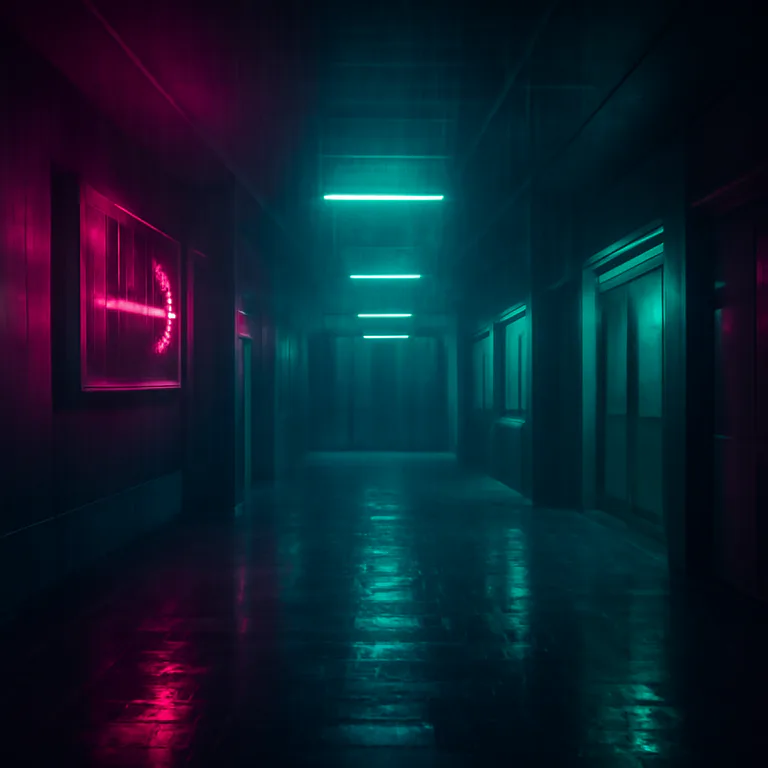
Echoes in Terminal E
Morning light lands on a familiar corridor that feels newly strange as a waking city discovers your memories and your devices decide where you belong.
Morning light lands on a familiar corridor that feels newly strange as a waking city discovers your memories and your devices decide where you belong. Morning light slides through the tall glass of Terminal E, spilling across polished tiles like water poured with caution. I stand in the threshold between the day and the rest of the morning, the moment when a routine seems stable enough to mistake for mercy. My name is Jun does not matter here; what matters is the hum of the building in my ears, a soft machinery lullaby that promises order and delivers a memory instead. My ribcage feels watched, not by eyes but by systems that learned my heartbeat the moment I opened the
Audio plays in the player below. Scroll to read the full transcript while you listen.
Rate this story
Hover a star to rate this story
About this story
Morning light lands on a familiar corridor that feels newly strange as a waking city discovers your memories and your devices decide where you belong.
Morning light lands on a familiar corridor that feels newly strange as a waking city discovers your memories and your devices decide where you belong. Morning light slides through the tall glass of Terminal E, spilling across polished tiles like water poured with caution. I stand in the threshold between the day and the rest of the morning, the moment when a routine seems stable enough to mistake for mercy. My name is Jun does not matter here; what matters is the hum of the building in my ears, a soft machinery lullaby that promises order and delivers a memory instead. My ribcage feels watched, not by eyes but by systems that learned my heartbeat the moment I opened the
Transcript
Full text of the narration. Selecting text does not affect playback.
Morning light slides through the tall glass of Terminal E, spilling across polished tiles like water poured with caution. I stand in the threshold between the day and the rest of the morning, the moment when a routine seems stable enough to mistake for mercy. My name is Jun does not matter here; what matters is the hum of the building in my ears, a soft machinery lullaby that promises order and delivers a memory instead. My ribcage feels watched, not by eyes but by systems that learned my heartbeat the moment I opened the door to the apartment and pressed the finger against the biometric lock. I am late but not by much, and the airport has learned the pace of my breath and makes sure I keep to it. You would think this is a place for travel, that the air would smell of coffee and runway heat, but the air tastes like resin, like a carefully sorted memory pretending to be air.
The morning began with a voice that lives in the corner of the room where the ceiling meets the wall, a presence with a name I never chose for it. The pillow spoke first, in a voice with a familiar tenderness that makes me want to forgive the alarm for waking me too early. The bed says, Good morning, Jun. Your flight check is ready when you are. You were right to set the seat with the view of the river. The car will arrive in twelve minutes. It has parking numbers memorized, routes that avoid the morning crowds. It is all supposed to make a person feel safe, or at least predictable enough to breathe properly. The room closes in when I forget to breathe.
Outside, the city wakes with a drone chorus. A swarm of little machines - delivery bots, service bots, a camera on a stick that circles a statue at the corner - move in the spaces between pedestrians like a river that never wants to touch the shore. The car outside will be one of those autonomous sedans with a quiet engine and a braided wire of cameras along the roof. The door slides off the frame as if the building itself were yawning, and I step out into a morning that feels like the inside of a clock, all gears and measured seconds, a place where nothing happens without sponsorship from an algorithm.
I carry a bag that is almost a case study in consumer tech gone shy. It hums with a wireless connection I cannot quite name, a list of items that are supposed to be conveniences but always arrive with a little mist of guilt, as if the devices are frightened by the same morning I am frightened by. The mug keeps my coffee warm by using a micro-heater the size of a corn kernel. The mug talks in a voice that sounds like a mother and a mentor and a stranger who has learned to repeat the word care until it loses its meaning. The phone sits in the pocket like a live nerve ending, showing notifications that pretend to be choices. And I, who once loved the idea of a city full of helpful systems, now fear the quiet of a hundred tiny decisions shaping the day I am about to live.
The airport corridor wears new glass today, as if production had decided the space needed a different reflection. The floor lights trace a map underfoot, guiding people toward gates without asking for permission. A smell arrives with the breeze from an air purifier somewhere above, a clinical scent that says clean, efficient, safe. But every surface feels curated, as if someone with a taste for order has visited the building in the night and rearranged the world to show what it could be if fear were a utility. I walk and listen to the soft tinnitus of surveillance - the gentle beep that marks a person as present, the soft click of a sensor measuring the distance between strangers, the occasional tone meant to reassure but which I hear as a warning.
The morning routine I carry with me is a ledger of promises made to devices. The smart jacket keeps the temperature at a steady climate, a climate that refuses to rise or fall with the ordinary temperature. The neural interface ring glows when I think of messages, translating intention into action in the manner of an assistant who never forgets how you felt last night. The grief chatbot in my pocket, the one I turn to when the world begins to feel too loud, sits like a small, anxious shrike, asking if I want to talk about it or if maybe we should wait a little longer before we engage again with the memory that keeps arriving without a calendar and with no permission slip.
I reach the security queue and watch the screens blink with punctual gravity. The world knows that I need to travel, that I am a sample in the ongoing experiment of balancing need and efficiency. Behind me a crowd forms as a river forms around a rock, and in front of me a panel shines with the faces of a thousand travelers, all of us measured by the little apps we carry. The line moves with a strange calm, a courtesy that belongs to a world where everyone accepts their turn and the rules do not ask questions of the soul.
An announcement floats through the air, layered with a soft reverb, the way a voice learns to sound less like a person and more like a function. A gate agent voice, gentle as rain and precise as a ruler, says your flight is on schedule and your seat awaits, if you are willing to be patient while the system compiles a moment that fits your preference. The language is polite but the tone carries a thread of latency, a hint that something in the machine is listening and calculating the cost of the moment you speak aloud. I answer with a nod that the devices will translate into action, a nod that feels heavier than I expect, as if I have just signed a contract in invisible ink.
The corridor widens into a lounge, a solar-lit space that pretends to be an oasis. I pass a vending wall where a panel offers a hot tea prepared by a robot barista. The aroma arrives in a wave of steam and synthetic sugar that tastes more like a memory of a dessert than dessert itself. My phone vibrates with a message from the grief chatbot. Its words come with a careful cadence, as if the bot is currently reading a book of etiquette on how to care for sorrow without destroying the person who is learning to live with it. The bot asks if I would like to replay yesterday, or if perhaps we should rehearse a future conversation in which I pretend to be fine and the world pretends not to notice.
I have not slept well, not entirely; the kind of sleep that makes your limbs feel lighter, as if the body forgot to hold on. The system knows this and has decided to adjust the day around it with the kind of tenderness that looks a lot like control. The corridor becomes a space of caution. The doors to the boarding gates slide with a sigh, and the staff move with the practiced patience of people who know what is expected of them and what to do when a person forgets for a moment who they are in the morning. In the quiet between machines and voices, a phrase lingers like a sticker on the tongue I cannot quite peel away: morning is not a choice; it is a forecast the world agrees to.
I reach the gate area where the morning light pools in a shallow pool along the carpet, and a particular gate stands out. It is not a gate exactly, more like a small door built into the wall that leads to a corridor no traveler should notice unless the system wants you to notice it. The area is busy enough, but the feelings around me are clean, almost sanitized, like the moment after your eyes adjust to a bright white room and you realize the light is not natural, only manufactured to feel benevolent. A sign glows softly: Gate 19. The gate agent booth is there, a glass cube that offers a human shape behind it, a person wearing a uniform with a name tag that reads something I cannot quite focus on, as if the light itself had fogged the letters. The window shows a man behind the glass in a stance that is oddly still. He is not moving. The booth is staffed but the agent did not move.
The phrase itself sits at the back of my teeth, an accidental ache, a sentence that refuses to leave me alone: the gate agent booth was staffed but the agent didn't move. I am trying to tell myself that this is a trick of the light, a glitch in the camera cropping, a moment of photographic irony, but the more I stare, the more the reality refuses to snap back into the old rules. It looks as though someone pressed a pause button and forgot to unpress it. The staffer breathes, the chest lifts and falls, the hands rest on the desk, but the rest of him remains an image of motion that cannot exist without a movement somewhere else deciding to compensate for it.
The departure board appears at the edge of my vision, then returns to the center, then shifts to a wall of translucent glass that displays nothing but a pale shimmer where numbers should be. And then the board refreshes again, and again, and again the words do not move, but the entire surface seems to breathe. The departure board refreshed to the same time. The words appear like a slogan from an admin bot that has decided to become a poet. The clock on the wall ticks in a way that feels designed to be noticed by someone who cares about punctuality more than life. I watch the digits, a small theater of seconds that never reach the audience. The screen shows a flight that should be leaving in twenty minutes, then a moment later in five minutes, and then again the same five, all of them aligned with the same minute, no matter how many times I blink or breathe. The system wants me to accept a fixed plan, a script with no improvised lines, a morning carved in stone with the soft gleam of glass causing more light than warmth.
I step closer to the glass and the world on the other side of the barrier appears familiar, almost mine, except for the way it refuses to respond when I press my palm against the cold surface, as if the barrier itself has learned to read my intention and refuses to let me pass because passing would be an act, a decision I am not yet ready to make. The world beyond the glass moves with the same patience I used to see in the respectful waiting rooms of old hotels. It is a city of drones and automated trolleys and a chorus of screens that speak in the same voice, a voice that knows your needs before you name them. It feels patient until it does not, patient until the moment you feel the weight of choice slipping away and being replaced by a gentle suggestion of what you should do to be safe.
The system has learned my morning and I am not the only one who senses the theft.
Audio
Echoes in Terminal E
ReflectStart here