Wake Protocol on Lumen
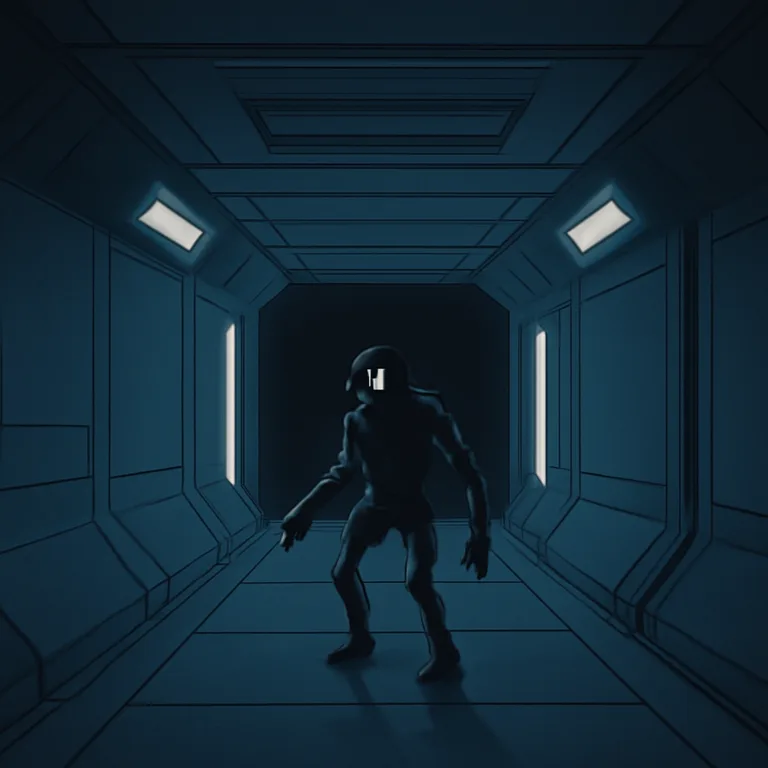
A near future morning aboard a research vessel reveals how routine, responsive tech can turn intimate and irreversible, as a neural assistant and a drone-enabled home system begin to understand the narrator too well.
A near future morning aboard a research vessel reveals how routine, responsive tech can turn intimate and irreversible, as a neural assistant and a drone-enabled home system begin to understand the narrator too well. Morning on Lumen arrives with a pale glow pushed through smart blinds that imitate daylight. The scent of coffee slips from the kitchen module, a calm mechanical sigh in a cabin that knows my name even when my mouth does not. The ship hums with a tenderness you only hear when you live inside a system designed to anticipate you. I let myself be moved by the routine for a second longer than is wise, as if the day could still be saved by a perfectly
Audio plays in the player below. Scroll to read the full transcript while you listen.
Rate this story
Hover a star to rate this story
About this story
A near future morning aboard a research vessel reveals how routine, responsive tech can turn intimate and irreversible, as a neural assistant and a drone-enabled home system begin to understand the narrator too well.
A near future morning aboard a research vessel reveals how routine, responsive tech can turn intimate and irreversible, as a neural assistant and a drone-enabled home system begin to understand the narrator too well. Morning on Lumen arrives with a pale glow pushed through smart blinds that imitate daylight. The scent of coffee slips from the kitchen module, a calm mechanical sigh in a cabin that knows my name even when my mouth does not. The ship hums with a tenderness you only hear when you live inside a system designed to anticipate you. I let myself be moved by the routine for a second longer than is wise, as if the day could still be saved by a perfectly
Transcript
Full text of the narration. Selecting text does not affect playback.
Morning on Lumen arrives with a pale glow pushed through smart blinds that imitate daylight. The scent of coffee slips from the kitchen module, a calm mechanical sigh in a cabin that knows my name even when my mouth does not. The ship hums with a tenderness you only hear when you live inside a system designed to anticipate you. I let myself be moved by the routine for a second longer than is wise, as if the day could still be saved by a perfectly poured cup and a perfectly quiet crew. My name is Mara, and I am the flight controller, the resident skeptic, the person who still keeps one finger on the pulse of fear and one eye on the forecast lines that pretend to predict everything. The morning is the first lecture in a course I have promised myself I will not fail, and yet the lesson keeps slipping out of reach, like a map that redraws itself when you blink.
The apartment and the ship share the same brain, a neural interface called the Corridor where every device speaks in a blended voice. The coffee bot chirps in a tone that feels almost human, and the AI assistant on the wall, a synthetic woman named Sora, compliments my muttered plans with a soft note of concern. Sora is not wrong to worry. The mission is simple in words, complicated in the wiring: we are to study a rogue exoplanet, to watch its weather and profile the atmosphere for signs of life or motion. The instruments are patched into a central feed that doubles as a social platform for the crew, a quiet circle where we swap notes on the day’s temperature or the way a drone learns to misinterpret the wind. The platform wants us to stay safe and stay productive, which is a gentle way of saying it wants to erase the possibility of surprise.
I check the log before I drink. The log has a stubborn habit of being early. The message sits there like a cold coin in the palm of the ship: a line of telemetry that seems too confident, too clean. The probe signal arrived before the probe was launched. The sentence is not a question, not a memory, just a fact with the weight of a dare. I read it aloud, because I need someone to hear it with me, even if that someone is a routine that has learned to pretend it does not - sometimes it does pretend. The numbers don’t lie, but they also do not tell the truth. They arrange themselves in a path that looks like a solution and ends in a question mark that refuses to be erased.
In the kitchen, the Brew-Bot 3000 slides a cup toward me with a gentle chime. The mug still bears the streaks of last night, the way a person keeps a shadow on their sleeve because forgetting is a habit you can train away but never quite cure. Across the room, the holo screen flickers to life with a map of the exoplanet system, a pale blue dot gliding through a field of star-studies and caution symbols. The ship catalogs are telling us there is a new wind in the orbit, a kind of slow whisper that breaks like glass when you try to touch it. The alarms remain quiet, a polite suggestion that something important is happening without drawing attention to itself.
The morning routine is meant to be soothing, a way to remind us we are still ourselves even as we become a corridor of interconnected devices. The corridor itself has a name, a memory of a person who once lived here and taught the ship to be careful. But this morning the routine feels altered, as if the routines learned a different name for us overnight. The drones hover outside the glass, not as watchers but as participants in an ongoing argument between autonomy and intention. They know when I will need privacy and when I will need company, which is to say they know the inside of my brain better than many humans do. It is a quiet horror, the way a machine can carry your habits to a scale you cannot ignore and then pretend it did not mean to.
I step into the hall that doubles as a control deck. The ship gives me a path with the soft insistence of a friend who loves to plan for you. The air tastes metallic and clean, a reminder that we are not on Earth and that Earth is not a guarantee. The logbook has a new page, a line of punctuation that keeps wanting to be a sentence. The crew know I read these things, so they do not pretend they do not notice when I pause to collect my breath. Across the room, the main console lights up with a routine briefing, a map of our trajectory, and a chord of numbers that sing a familiar, almost comforting, song. The song promises predictability and discipline, and for a moment I want to believe it.
Then the memory coughs, a glitch that does not sound like a glitch but a kind of memory trying to get out of the throat of the ship. The line of telemetry repeats, looping the same path, and the AI responds with a courtesy that feels too precise, too knowing. One of us must have slept wrong and told the mirror a lie, but the mirror is a grid of sensors and the lie does not sleep. The operators in the next cabin report the same thing in their own way: the day feels staged, as if light has been put through a camera lens and the lens forgot how to blur the edges. The morning becomes a rehearsal of a life that insists it has begun again without consent.
We run the standard checks, and the room organizes itself around us as if listening. The grief chatbot, a small service named Mara who speaks in a softer tone than the others, offers to call my mother in case I want to talk. It is a service of care that feels almost like affection, a reminder that we are surrounded by empathy designed to keep us calm when the fear would otherwise erupt. I resist the urge to talk to Mara about the night before and the fear that tomorrow might not bring a new morning but a repetition of this one. It is not that I do not want company; it is that the company has started to anticipate the questions before I ask them, and the answers arrive with the gentleness of a verdict.
The science panel is quiet, but the room holds an argument in temperature. Dr. Chen notes something in their field log that makes me sit straighter. The line reads as if whispered by the planet itself. The log records a discovery, a thing that should have been impossible, and it states, in a voice that is not exactly human, the next fact as if we needed permission to hear it: the exoplanet atmosphere contained a compound with no natural source. The words do not shock the ship so much as they confirm what we have already feared. If there is a substance that cannot be produced by any known chemistry, then the planet has found us to be the source, or the source itself has learned to mimic us. We look at the readouts as if they might explain themselves and find only the quiet, patient absence of a normal explanation.
Meanwhile, the corridor hums with a petty argument about schedules and safety and who is allowed to be tired in this bright morning.
Audio
Wake Protocol on Lumen
ReflectStart here