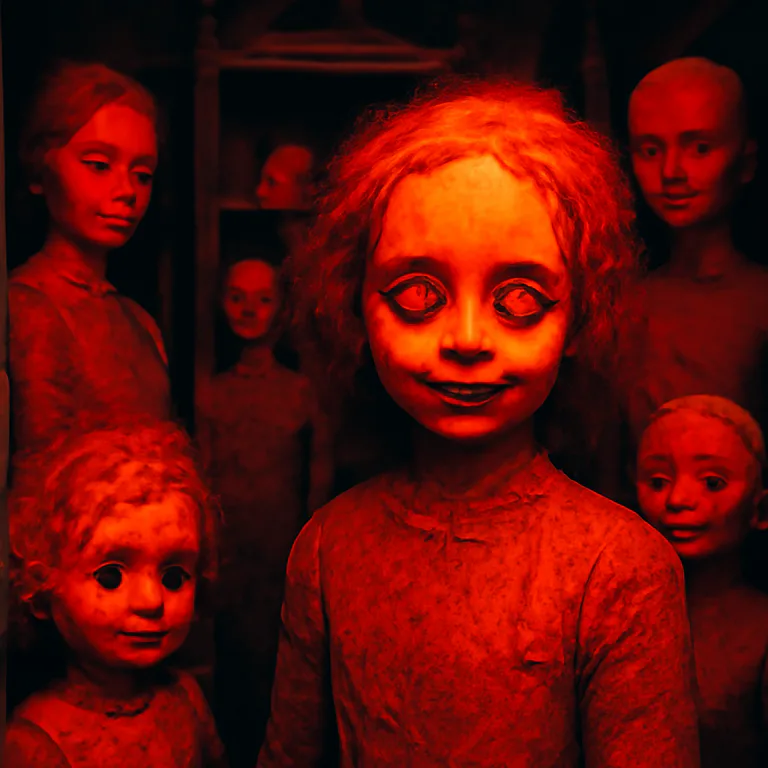
The Wardrobe of Glass Eyes
A morning that should begin with routine and light spirals into a waking room of dolls who appear to live the day before you do.
A morning that should begin with routine and light spirals into a waking room of dolls who appear to live the day before you do. The house woke with the soft creak of a hinge and a kettle sighing its tiny steam. I counted to three before I opened the kitchen door, because the first seconds of morning are fragile, like a glass held too tight. The floor bore a thin film of dust that glowed in the pale light, and I reminded myself to sweep, to wipe, to move as if nothing were watching. The night before, I had arranged the dolls in the hallway like a quiet chorus, each figure a patient sentinel with a story I no
Audio plays in the player below. Scroll to read the full transcript while you listen.
Rate this story
Hover a star to rate this story
About this story
A morning that should begin with routine and light spirals into a waking room of dolls who appear to live the day before you do.
A morning that should begin with routine and light spirals into a waking room of dolls who appear to live the day before you do. The house woke with the soft creak of a hinge and a kettle sighing its tiny steam. I counted to three before I opened the kitchen door, because the first seconds of morning are fragile, like a glass held too tight. The floor bore a thin film of dust that glowed in the pale light, and I reminded myself to sweep, to wipe, to move as if nothing were watching. The night before, I had arranged the dolls in the hallway like a quiet chorus, each figure a patient sentinel with a story I no
Transcript
Full text of the narration. Selecting text does not affect playback.
The house woke with the soft creak of a hinge and a kettle sighing its tiny steam. I counted to three before I opened the kitchen door, because the first seconds of morning are fragile, like a glass held too tight. The floor bore a thin film of dust that glowed in the pale light, and I reminded myself to sweep, to wipe, to move as if nothing were watching. The night before, I had arranged the dolls in the hallway like a quiet chorus, each figure a patient sentinel with a story I no longer cared to hear. In the cold glow of dawn, they looked almost human, and for a heartbeat I pretended not to notice how still they were not, how their silence held a question I did not want answered.
The first sip of coffee tasted of old rain and old promises. The sun threaded through the blinds in thin gold bars, painting the porcelain in a shy morning armor. The dolls stood along the wall, their glass eyes catching every pale beam, throwing it back at me as if the room itself were blinking in two places at once. The air held the scent of sun-warmed fabric and something else I could not name, something like a room after a long rain, the air tasting of memory and wrong prayers whispered to no one.
I moved through the rooms with the careful rhythm of a ritualized routine, one which felt both necessary and faintly ridiculous in the way only truth hidden within a habit can feel. Dust cloth in hand, I touched the shelves and lines of figures that watched with retreated breath. The first thing I noticed every morning, and the thing that always unsettled me the most, was how little they moved when I looked toward them. If I turned away, I could swear there was a shift, a breathing of the air itself, like the room exhaling a secret. A doll blinked when I looked away. Not a faint blink you might attribute to a tired toy, but a deliberate snap of the eyelid and back again, as if the thing had opened a gate and closed it with the turn of a lid.
The wardrobe door stood slightly ajar where I kept the mannequins I did not trust to stand in the open daylight. It faced the hallway and caught the sun like a mirror. I told myself I was simply tired, that the morning light played tricks on the margins of the room. Yet the room clung to me with a quiet insistence, as if the walls themselves were listening to a language I did not know and pretending not to. The figurines wore their clothes as if attending a ceremony, their seams neat, their posture perfect, their eyes drifting toward the door as though they might step out into the day and forget to return. And still I did not speak to them, because I knew once I spoke, I would be responsible for what was said.
In the display case by the hall I kept a single old doll, one with a mouth stitched into a smile too wide, as if the seam could not help but show its intention. The light fell across that face in a way that made the smile both inviting and wrong, a doorway that invited but refused to open properly. I told myself it was a product of bad craft, nothing more than an old toy with a too ambitious grin. But as I stood there, counting the teeth in the grin and hoping to convince myself it was harmless, the room pressed closer, and the morning grew heavy with the sense that the objects were listening more closely than I allowed myself to admit.
The clock on the wall ticked with a stubborn, patient rhythm, counting out minutes that stretched into something like hours. I moved to the sink to rinse the mug and found, on the window ledge, a note pinned with a single brass pin. It was not a scrap of paper but something like a memory pressed into thin metal. It said only a sentence I did not expect and could not forget: keep the daylight honest. The words did not belong to me, but they felt like a vow spoken in a language I had once understood long ago, a language spoken to the way rooms breathe and doors remember their hinges. I folded the note away, a pale ache of guilt in my chest, and began to prepare the morning tea in a cleaner, quieter manner, as if performing an exorcism on the hour.
By mid-morning, the house had settled into a rhythm that belonged to someone else. The mannequins in the hall adjusted their gloves and hats with the tiniest of nudges, as if they were testing gravity's patience. When I turned my head to silence a sudden creak near the pantry, I caught sight of the glass eyes again, glimmering not with attention but with a curiosity that belonged to a creature waking from a long inventory, a creature deciding whether to remain a line on a sheet or become a life inside the walls.
I spoke aloud to no one in particular, a habit I kept from years of living alone in spaces that frightened me less than their occupants. I told them I would be leaving soon, that the morning would end and I would fetch the mail and walk to the corner store and pretend the day belonged to me alone. They did not answer, of course. The room did not permit answers, only the soft rustle of fabric and the quiet, measured breath of their stillness. Yet the story they told me with those still faces grew louder with every passing moment, and I found myself listening more than I listened to myself.
In the kitchen, the sunlight seemed to rearrange itself along the countertop, drawing lines that looked almost like handwriting. And then I saw it - the moment that makes a person understand that their own life is a rumor in someone else’s mouth. One of the dolls, a younger girl with a pale scarf tied about her neck, took a step. Not a step that a human would recognize as a step, but a tiny shift of weight, a tilt of the head, a gesture that suggested a question. My breath hitched. The creature did not move again, but the air had already changed, as if the room were listening to a suggestion and considering it seriously for the first time in years.
That is when the phrase came back to me, a memory I did not trust and could not forget: blinked when I looked away. It sounded ridiculous when I rehearsed it in my head, but I could not shake the image of the thing blinking, as if it had learned to borrow time from my attention and spend it elsewhere. I watched, and it did not blink again. I blinked, and it blinked when I looked away. It was a simple test, a cruel experiment the room seemed to conduct on its own. The toys watched with their glass eyes, and the hour grew heavy with the expectation that I would fail the test or pass into a truth I did not wish to see.
The rain of the morning began, not with water but with a peculiar, lively draft that moved along the baseboards and pressed the curtains against the glass with polite insistence.
Audio
The Wardrobe of Glass Eyes
ReflectStart here