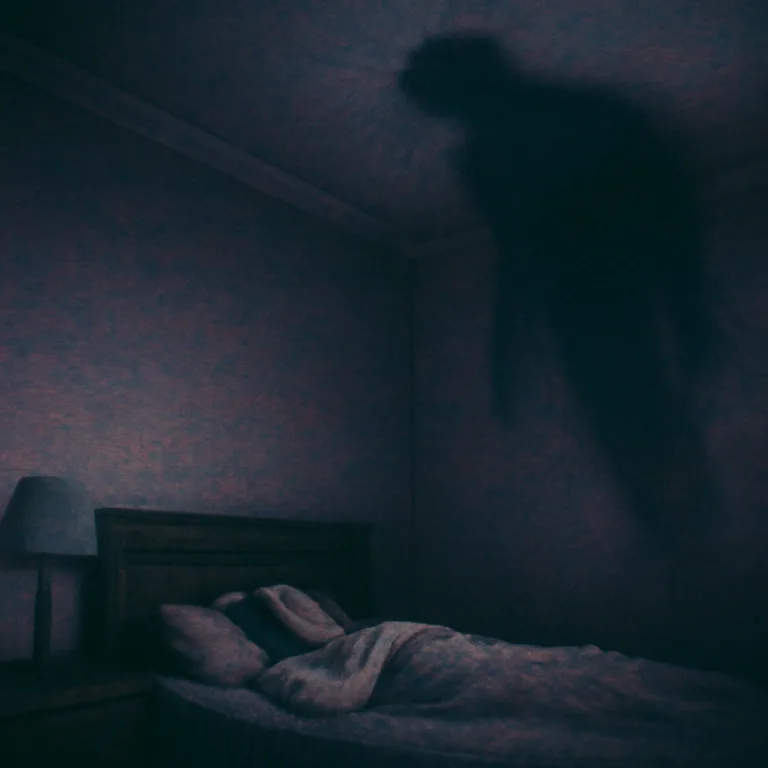
The Shadow on the Ceiling
In the dim hours of an evening, a sleeper wrestles with a sleep paralysis that turns a quiet room into a listening presence watching from above.
In the dim hours of an evening, a sleeper wrestles with a sleep paralysis that turns a quiet room into a listening presence watching from above. Evening had settled over the room like a soft shade, and I told myself to sleep as if to surrender a long argument with the day. The clock on the wall measured time in dull ticks, each one louder than the last, as if the house itself were listening for my breath. The lamp gave a pale orange glow, and the air smelled faintly of rain and old wood. I made myself comfortable, pulled the blanket up to my chin, and told the silence to behave. It did not. It wrapped itself around me
Audio plays in the player below. Scroll to read the full transcript while you listen.
Rate this story
Hover a star to rate this story
About this story
In the dim hours of an evening, a sleeper wrestles with a sleep paralysis that turns a quiet room into a listening presence watching from above.
In the dim hours of an evening, a sleeper wrestles with a sleep paralysis that turns a quiet room into a listening presence watching from above. Evening had settled over the room like a soft shade, and I told myself to sleep as if to surrender a long argument with the day. The clock on the wall measured time in dull ticks, each one louder than the last, as if the house itself were listening for my breath. The lamp gave a pale orange glow, and the air smelled faintly of rain and old wood. I made myself comfortable, pulled the blanket up to my chin, and told the silence to behave. It did not. It wrapped itself around me
Transcript
Full text of the narration. Selecting text does not affect playback.
Evening had settled over the room like a soft shade, and I told myself to sleep as if to surrender a long argument with the day. The clock on the wall measured time in dull ticks, each one louder than the last, as if the house itself were listening for my breath. The lamp gave a pale orange glow, and the air smelled faintly of rain and old wood. I made myself comfortable, pulled the blanket up to my chin, and told the silence to behave. It did not. It wrapped itself around me instead, careful as a question you cannot answer out loud.
Somewhere past the window, the air shifted and became still again, as if someone pressed a finger to the glass to listen for a heartbeat. Then there was the soft, domestic sound of breathing from the room next door, a reminder of life beyond the door you keep closed at night. My own breath slowed, in and out, in and out, a steady rhythm I hoped would convince the room to sleep with me. The night inside the room grew denser, heavy with the sense that it was listening, that it remembered every detail of me from days I thought I had forgotten. I told myself it was only tiredness and a trick of the old house. It was neither.
Then the air changed, not with a gust but with a sensation as if someone had pressed their palm against the fabric of the night and decided to draw a line across the ceiling. A shadow started to move where there should be nothing but pale plaster. Not a shape I could name, but a slow, deliberate drift as if the room itself were leaning toward some old, unopened memory. It began near the far corner, a darker edge that stretched and then cooled, passing along the ceiling with a quiet patience that felt almost ceremonial. Shadow on the ceiling, that phrase I would mutter to myself later, as if naming it would give me a map. I watched it drift, an ink blot seeping in reverse. It did not hurry. It did not bolt. It simply attended me, a patient visitor who had learned my habits and waited to be invited to stay.
The weight of sleep loosened its grip and then betrayed me. My body did not respond as I commanded it to. I tried to move a finger, to turn my head, to draw a breath with the strength I knew I possessed. I could not move. The room contracted around me, and all sound settled into a single, patient note. The lamp hummed in a tone that felt almost like a whisper. The air grew colder, smelling of iron and rain and something else, something ancient and almost kind, if you could mistake danger for kindness in the same breath.
I lay there and watched the shadow on the ceiling. It did not come closer, not yet, but it did something worse: it settled into the room’s memory. The old chair in the corner creaked as if someone shifted weight there, but no one did. The bedframe slid with a sound so thin you could miss it and still hear the message it carried. The room seemed to remember every night I had spent within it, and gradually it began to tell me about the nights it had spent with others who had lived here long before me.
I cannot move, I thought, and the thought came with a strange mix of fear and relief, as if admitting my powerlessness was the only thing keeping me alive in that moment. The phrase ran through my mind like a refrain I could not escape. I cannot move. Not because I lacked the will, but because something deeper, older than will, kept my limbs in their places and watched me through the air as if I were a specimen under glass. The room grew darker, yet the darkness felt intimate, almost protective, as if it were guiding me to listen rather than flee.
The shadow on the ceiling shifted again, not with menace but with a careful, patient pattern. It resembled a coastline etched in charcoal, a line you follow through a fog you cannot name. And then something spoke - not with words you could hear, but with a memory you could feel. I remembered a different place and a different night, a corridor in a building that hummed with lives moved on without saying goodbye. A whisper of a name and a door that never closed all the way. The recognition did not frighten me as much as the familiarity did. The room had learned my name and then forgot it, and in forgetting it held me in a tender, terrible custody.
Time slowed to a thin smear. The weight on my chest pressed just enough to remind me that lungs exist to fill themselves and then release. A steady ache settled there, a weight on my chest that kept me anchored to the bed and tethered to the room. I lay with that burden, listening to the quiet breath of the house as if it belonged to a friend who had come to check that I was still listening, still inside the story I call my life. The shadow on the ceiling moved in a manner that made me feel as if the roof itself had learned to breathe, to hold a secret close to its bones.
Then a memory arrived that did not belong to me. The old tenant who vanished on a stormy week, the landlord who spoke in half-sentences and never looked me in the eye when he warned me about the apartment’s past. He had said something about rooms wanting to remember who lives inside them, about nights that do not end unless a room forgets the dreamer’s name. I wanted to tell him he was wrong, but the words failed and the night absorbed them instead. The shadow on the ceiling grew intimate, and I understood that this was not a mere nuisance of darkness. It was the room remembering us both, keeping us in the same room long after our bodies have given up their claim to it.
The door at the far edge of the corridor remained shut. The clock continued to count out minute after minute, and the air grew heavier with rain that never fell, with footsteps that never came, with a story that would not end unless I found the courage to end it for myself. I did not want to know what lay beyond the patient shadow, nor did I wish to surrender the last of my waking thoughts to it.
Audio
The Shadow on the Ceiling
ReflectStart here