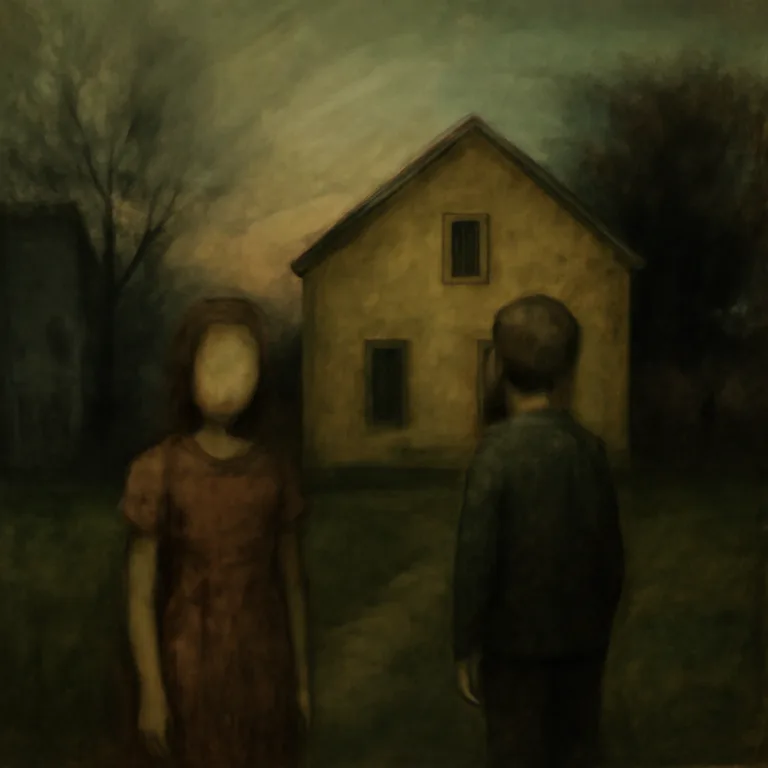
The Morning of a Wrong Memory
A calm morning unravels a memory that does not belong to the narrator, revealing a house, a color, and a memory that refuse to stay neatly on a single page.
A calm morning unravels a memory that does not belong to the narrator, revealing a house, a color, and a memory that refuse to stay neatly on a single page. The morning light crawled along the edges of the blinds, pale and patient. I lay still for a moment, listening to the kitchen clock tick in small, patient increments. The air carried the faint sweetness of rinsed dishes and something else, something like a rumor that morning tries to hush but cannot quite erase. The house hummed with quiet that felt almost conscious, as if it measured the hours before I would uncoil from the sheets and begin the day. I rose, slow as a rumor becoming a truth, and
Audio plays in the player below. Scroll to read the full transcript while you listen.
Rate this story
Hover a star to rate this story
About this story
A calm morning unravels a memory that does not belong to the narrator, revealing a house, a color, and a memory that refuse to stay neatly on a single page.
A calm morning unravels a memory that does not belong to the narrator, revealing a house, a color, and a memory that refuse to stay neatly on a single page. The morning light crawled along the edges of the blinds, pale and patient. I lay still for a moment, listening to the kitchen clock tick in small, patient increments. The air carried the faint sweetness of rinsed dishes and something else, something like a rumor that morning tries to hush but cannot quite erase. The house hummed with quiet that felt almost conscious, as if it measured the hours before I would uncoil from the sheets and begin the day. I rose, slow as a rumor becoming a truth, and
Transcript
Full text of the narration. Selecting text does not affect playback.
The morning light crawled along the edges of the blinds, pale and patient. I lay still for a moment, listening to the kitchen clock tick in small, patient increments. The air carried the faint sweetness of rinsed dishes and something else, something like a rumor that morning tries to hush but cannot quite erase. The house hummed with quiet that felt almost conscious, as if it measured the hours before I would uncoil from the sheets and begin the day.
I rose, slow as a rumor becoming a truth, and padded into the hall. The ceramic floor kept its own counsel under my weight, warming only where the sun touched first. The kettle waited on the stove like a small animal, blinking steam and steam again as if it had just woken from a dream about boiling rivers. The mug in my hand warmed, but the warmth did not sink into the bones. It stayed on the surface, as if something beneath was cooling, a truth refusing to thaw.
The day began with the kinds of motions you carry without thought until they turn wrong. The tea steeped, and I measured the minutes by the same ritual I had kept since childhood. The newspaper folded in half with a precise crease. The toast popped up exactly as usual, yet the butter tasted off, as if the morning had decided to use a different mood of salt. The house itself seemed to tilt a fraction when I turned my back, as though it had a memory of me that I did not share.
In the quiet I felt a tug toward the attic stairs, a pull I tried to ignore. The attic door, painted wood with a chipped edge, stood slightly ajar. Dust motes drifted in the pale daylight, becoming little floating instruments that conducted their own music. I told myself it was only the plan I had laid out years ago - to keep the past tidy in its corners, to pretend that the years were a straight line and nothing curved back on itself to bite.
The first sign that something was off was not dramatic. It arrived as a whisper in a bag, a sticky sweetness on the tongue, the sort of thing you notice when you pause to listen to the quiet between breaths. The attic light spilled down the stairs and touched the top of a cardboard box as if it knew it should not be there, as if memory itself had decided to rearrange its furniture in the night.
Inside the box lay a photograph. The edges curled in a way that suggested humidity and time, and the paper held a likeness I did not recognize at first glance. There were three people in the frame: a mother, a father, and a boy. The boy wore a knit cap that looked like pine needles pressed into yarn. The mother wore a smile that was almost official, as though she stood at the edge of a doorway and announced something she wanted to be believed. The father - the man I believed I understood - stood with his arm draped around the boy, his mouth a straight line that might have been a letter pressed into a page. The boy looked at the camera with a gravity that did not belong to a child, as if he already knew the weight of what would be said next.
I reach out and turned the photograph over, expecting the back to carry a date, a name, a caption to anchor the memory. Instead, there was a scrawled line in a hand I did not recognize, a fragile mark that trembled in the corners. For a moment I did not understand what it said. Then the letters crowded into form, a small, stubborn message that did not belong to the scene: I never had a brother.
The words stuck to the air in front of me, heavy and cold, as if they were an uninvited guest who refused to leave the room. Photographs should fix memory, I told myself, but this one unsettled the gravity of the room. The date on the corner looked old enough to be a lie dressed up as a truth. The more I studied the faces, the more the memory I was trying to keep still began to shuffle and cough in the corners of the mind.
There is a certain language to morning that you learn when you are small and then forget to translate as you grow older. It is in the way the light falls on the skin, in the way the dishes gather their steam, in the way the street outside coughs with a distant bus and a rumor of a newspaper fluttering in an open window. It is in the way a house never tells you everything, but it always hints at more if you listen with the corners of your eyes.
I carried the photograph to the kitchen and laid it down on the table with the other relics that linger in the spaces between rooms - the old calendar with its corners chewed by a cat, the key to the cellar that no longer fit any lock in the house, the glass jar that once held marbles and now held dust. A window threw a white stripe across the photograph, tilting the scene into a pale theater. The light did not stay still; it shifted as if someone behind the glass kept turning a dial, testing the edges of the morning for a reaction.
The memory began to tug again, this time with a more pointed insistence. I remembered mornings that felt too public for a private life, as if every yawn and stretch belonged to someone else. A boy in a woolen cap at the edge of the kitchen, not quite sitting still, not quite mine, but close enough that I had learned to claim him as a sibling because it was easier than admitting the truth. The memory pressed forward, a small door that would not stay shut.
I whispered the line that would later embarrass me in quiet moments: I never had a brother. The phrase came like a damp breath across a sheet of glass. It tasted like truth on the tip of the tongue and tasted like a dare to rewrite the past. The old house answered with a sigh, the beams creaking as if they disagreed with the confession or perhaps only needed to hear it spoken aloud.
The attic light faded a fraction, and with that shadow came something else, a sense that the morning had been coaxed into place by someone else’s schedule. The routine I guarded - the shower in the same corner of the bathroom, the cereal poured into the same bowl, the spoon moving through milk in an even, practiced rhythm - began to behave as if it were following a different conductor. The kettle hissed again, but the hiss did not rise from the kettle alone. It felt borrowed, as if the water wanted to sing a note that belonged to a room I had never owned.
I wandered back through the house, noting how the color of things changed with the pale sun. Paint seemed to have a temperature, and the morning cast the walls in a pale, unsettled hue. The house spoke in soft creaks and sighs, never loud enough to alarm, always enough to remind me that a room can keep secrets just as surely as a diary does. And as I moved from room to room, I found the same memory returning in small ways, the same thread tugging at me from the corner of sight.
In the living room the sun pooled on the floor, making a bright rectangle that did not belong where it should be. A chair stood at the edge of that rectangle, and on the chair rested a piece of folded paper I did not remember placing there. I picked it up and unfolded it with the care I use when handling something valuable and dangerous together. The handwriting on the page was neat, the ink a shade too dark, as if written by someone who knew they were bending the truth but chose to do it anyway.
The note was not a letter but a confession in a different key. It spoke of a young boy who could have been my brother, but who would never be allowed into the house now, because the house remembered him differently. Each entry was a reminder that memory is a lane with signs that can be turned around, a path that leads back into rooms you thought you had closed.
I paused over a corner of the page where I had scribbled a phrase I did not understand at the time but now recognized with a slow, creeping certainty. The words described a game we played long ago, a game that involved two boys swapping places at the edge of a doorway, one stepping into the other’s world to see how the day looked from behind another pair of eyes. It was a game that did not vanish with time but lurked, waiting for the morning to reveal it again with the brightness of an unarmed truth.
The more I looked, the more the house began to breathe in a way that did not frighten me so much as convince me that the day itself belonged to someone else. The color on the walls, the way the light pooled and refused to spill in the exact directions it should, the little sounds - the catch of a hinge, the whisper of a radiator, the distant chime of a clock in a neighbor’s house - these things formed a chorus that warned me not to forget what I had learned in that attic.
Around mid afternoon a door at the end of the hall opened by itself and stood there as if inviting me to step through. It was the door to the old nursery, a room that had not been used since I was a small child, a room whose scent was a mixture of nap time and peppermint candy, a scent that should have made me nostalgic but instead pressed me to look deeper. The walls in that room bore a tint that could be described as a pale yellow, a shade that almost whispered about the color of sunlit plaster when a room is meant to be happy, a color that the memory insisted had never existed in this house.
I forced myself to step inside and found a dresser with a mirror that had not aged well, the silvering flaking in small, stubborn flakes. The mirror reflected not just my face but the space behind me as well, a second version of the room that did not align with the one I stood in. The reflection showed the attic stairs again, the same box of photographs, the same note with the same words. But the reflection also showed a child standing in the doorway behind me, a figure I could not place other than to know it had always been there in the background of my life, a silent companion who listened to my breath as I breathed in the quiet of the house.
I did not turn around to verify the figure, not yet. The risk of acknowledging the second presence was a risk I could not afford to take without a proof stronger than memory. I set my jaw and spoke to the mirror as if the glass could answer for the house. The words came, softened by fear and tempered by a stubborn curiosity: You belong to the story of this house, but you do not belong to me.
Audio
The Morning of a Wrong Memory
ReflectStart here