Is "The Strangers" Creepypasta Real?
No. "The Strangers" is a fictional reader-submitted subway horror story, not a documented case.
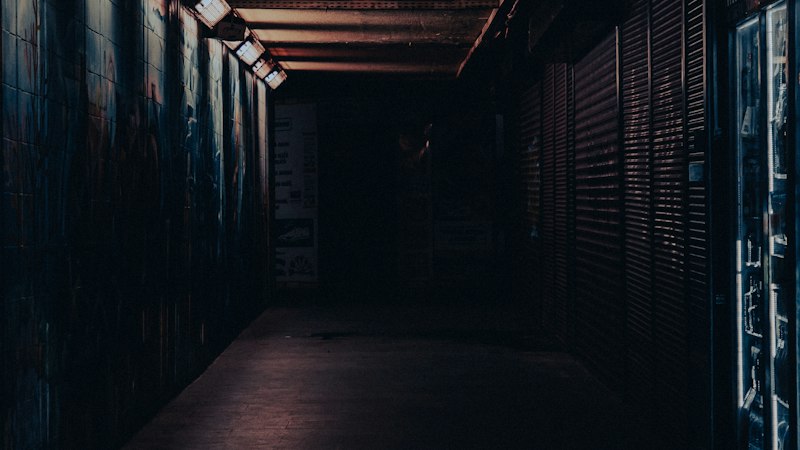
What does the story describe?
A man becomes fixated on a silent passenger riding the subway, and later describes finding himself trapped in an endless underground labyrinth with rules that transform him the longer he remains inside.
Who wrote it?
The story was published by Creepypasta.com as an anonymous reader submission; no individual author or original publication date is credited to it.
Is there a real subway incident behind it?
No. No transit authority record or documented case matches the story; it's fiction that uses a familiar, mundane setting, an ordinary subway ride, to escalate into an impossible underground horror.
Why does a subway setting make the story feel real?
Subways are public, routine places with their own rules, and most riders know the small unease of sharing a car with someone who seems to be staring. The story begins with that recognisable discomfort rather than with anything supernatural, which gives the reader a foothold in ordinary experience before the premise changes. Underground transit also removes the easy exits: there's no sidewalk to step onto, no familiar landmark to orient by, and a wrong turn leads into maintained corridors that look like the ones you came from. Those details do the work of a haunted house without needing an old, isolated building, and they're why the story reads like something that could happen on a commute.
How do labyrinth stories turn public spaces into traps?
A maze is frightening because it removes the assumption that a place has an outside. The Strangers takes a transit system, something designed to move people efficiently through a city, and reimagines it as an endless underground structure with rules that change the person inside it. That transformation is more effective than a simple monster because it attacks the reader's sense of how places work. Even a familiar station becomes unreliable: every corridor looks like the last one, every exit is a guess, and the rules of the space seem to have been written by someone else. Stories built on that device keep working because navigation is a skill most people take for granted until it stops helping.
How does it compare to other liminal-space horror?
Liminal-space horror draws dread from transitional places stripped of their purpose: empty malls, late-night stations, office corridors after hours. The Strangers belongs to that family, but it adds a body-horror element that many liminal stories avoid. Where the Backrooms present a space that goes on forever, this story suggests that the space is actively changing the person trapped in it. Readers who prefer pure environmental unease may find that extra layer more explicit than the genre usually allows; readers who like a narrative with consequences tend to find it more satisfying. Either way, the setting remains the primary source of fear, with the transformation serving as a payoff for the rules established earlier.
Why is the story's anonymous credit significant?
The piece appeared as a reader submission without a named author or a confirmed publication date, which places it in a different category from stories with a traceable creator. Anonymity makes a first-person story harder to check: there's no other work to compare it with and no author who can confirm whether it was meant as fiction. Readers often interpret that gap as evidence that something is being hidden, when it usually just reflects how creepypasta sites collected submissions. The practical effect is a longer-lasting "is it real" question. A credited story can be researched and eventually set aside; an anonymous one keeps circulating with no obvious person to ask.
Why do readers keep looking for a real station behind it?
Specific settings invite verification, even when the story gives no name or city. A reader who recognises the described station, tunnel, or passenger type will naturally wonder whether the account was drawn from a real incident, and that impulse keeps search queries alive long after the story's fictional status is clear. It's the same pattern behind "is it real" searches for urban legends tied to real locations. The honest answer is that the details are generic enough to fit many transit systems and too vague to match any documented case. That's a feature of the story rather than a flaw: it needs a believable subway, not a specific one.
Frequently asked questions
Is "The Strangers" creepypasta based on a real subway incident?
No documented case supports it.
Who wrote "The Strangers"?
It's credited as an anonymous reader submission to Creepypasta.com.
Is "The Strangers" based on a real person the narrator met?
No. The silent passenger is a fictional figure, and there's no identified real person behind the account.
What genre is "The Strangers" creepypasta?
It's liminal-space horror with a body-horror element, using an ordinary subway ride as the entry point.
Does the story have a clear ending?
No. It ends with the narrator changed by the underground maze rather than with a resolved escape.
Listen to free narrated creepypasta
Night Tales publishes original narrated creepypasta and horror audio stories, free, no account required, five to fifteen minutes per episode.