Is Bloody Mary Real?
No. Summoning "Bloody Mary" in a mirror has no documented case of anything appearing; the ritual is a well-studied piece of folklore.
What is the Bloody Mary ritual?
The game involves standing in front of a mirror, usually in a darkened room, and repeating the name "Bloody Mary" a set number of times, supposedly summoning a vengeful spirit who appears in the glass.
Where does the legend come from?
Folklorists, notably Janet Langlois in a widely cited 1978 study, have traced versions of the ritual back through older mirror-divination folk games that long predate the specific "Bloody Mary" name, which appears to have attached to the game sometime in the 20th century.
Has anyone ever documented Bloody Mary actually appearing?
No. No photograph, video, or independently verified account exists. Folklorists study the game as a form of adolescent ritual and self-induced fear in a darkened room, not as evidence of a genuine summoning.
Is there a psychological explanation for why people report seeing something in the mirror?
Yes. Prolonged staring at one's own reflection under dim lighting is known to produce a documented perceptual effect called the strange-face illusion, where the brain's face-processing systems, deprived of normal visual stability, begin generating distorted or unfamiliar-seeming features, a phenomenon studied independently of the Bloody Mary legend specifically. Combined with the anticipatory fear built up by the ritual itself, repeating a name associated with summoning a vengeful spirit, this real perceptual effect gives participants a genuine, if misattributed, sensory experience that can feel like seeing something appear, without anything supernatural actually being present.
Why has Bloody Mary remained a recognizable ritual across multiple generations?
Unlike many childhood games that fade once a generation grows up, Bloody Mary has been continuously reintroduced to new cohorts of children and teenagers through slumber parties, summer camps, and more recently social media videos, each new generation treating it as a fresh discovery rather than an inherited tradition. That continuous, informal reintroduction through peer groups rather than any single media source is part of why folklorists consider it a particularly resilient example of oral tradition surviving in a media environment otherwise dominated by centrally produced content.
How is Bloody Mary played, and what variations exist?
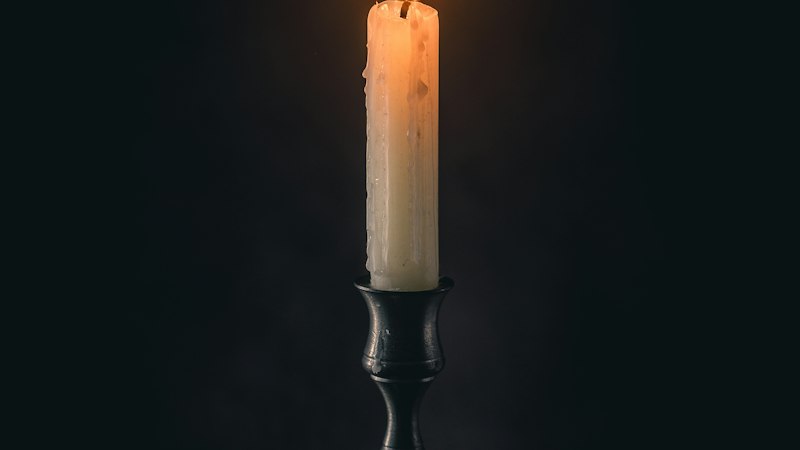
The basic version involves a darkened bathroom, a mirror, and a chant of the name a certain number of times, commonly three. Variations add candles, spinning around, running the faucet, or saying a longer rhyme, and the figure goes by other names, including Mary Worth, Hell Mary, and Mary Whales. Some versions promise a glimpse of a future husband, while others warn of scratches or a vengeful ghost. These differences show the game's flexible, oral nature: each group adapts it to its own setting and tastes, which is exactly how folklore behaves as it moves between children and across generations.
Is it dangerous to try the Bloody Mary ritual?
There is no evidence of any supernatural danger, but a few ordinary risks are worth noting. Candles in a bathroom can be a fire hazard, and dim lighting makes it easier to trip or knock things over. Fear can also be real even when the cause isn't: some people, especially younger children, find the game genuinely frightening and may have trouble sleeping afterward. If you're running it as a party game, keep it light, keep the lights safe, and let anyone opt out. The ritual's scares are produced by expectation, darkness, and group suggestion, not by anything in the mirror.
Where does the name 'Bloody Mary' come from?
A popular explanation links the name to Mary I of England, nicknamed "Bloody Mary" for persecuting Protestants, but folklorists generally treat that connection as unproven and note that the game has no clear tie to any historical person. Other explanations point to older mirror-divination games and to generic names used in different regions, which suggests the specific name attached later. Researchers stress that the lack of a single documented origin is typical for children's folklore, where names, rhymes, and rules change with each retelling and rarely come from one identifiable source.
Frequently asked questions
Has Bloody Mary ever really appeared to anyone?
No verified case exists; folklorists study it as a ritual game, not a documented supernatural event.
Where did the Bloody Mary legend come from?
It descends from older mirror-divination folk games; the specific name became attached sometime in the 20th century.
Is there a scientific reason people think they see something in the mirror during the ritual?
Yes. Prolonged staring at one's reflection in dim light can produce a documented perceptual effect called the strange-face illusion, which combined with anticipatory fear can create a genuine but misattributed sensory experience.
Why has the Bloody Mary ritual stayed popular across generations?
It's continuously reintroduced to new children and teenagers through peer groups, slumber parties, and now social media, with each generation treating it as a fresh discovery rather than an inherited tradition.
Listen to free narrated creepypasta
Night Tales publishes original narrated creepypasta and horror audio stories, free, no account required, five to fifteen minutes per episode.