Is "Abandoned by Disney" Real?
Partly. The abandoned Disney parks shown online are real, but many of the horror stories attached to them are unverified embellishment.
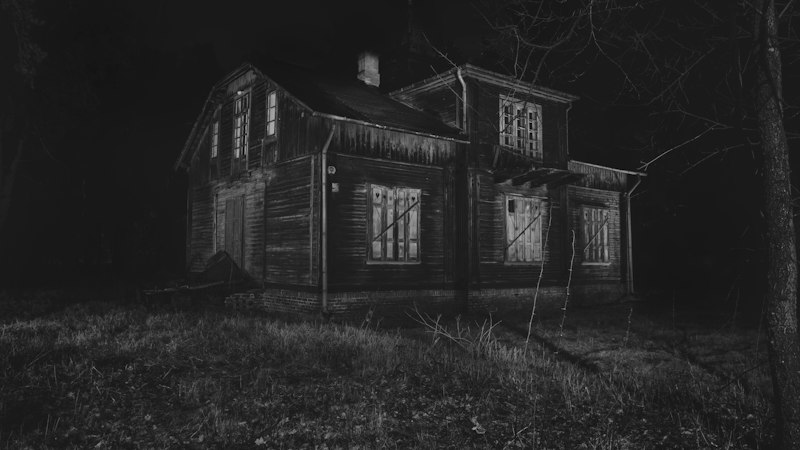
What do "Abandoned by Disney" videos and posts actually show?
Most of this content is built around genuinely real, documented site closures: River Country, Walt Disney World's original water park, closed in 2001 and sat abandoned for years before partial demolition, and Discovery Island, a zoological park, closed in 1999 and also left standing empty for an extended period. The decayed footage and photos circulating online of both sites are largely authentic.
Are the hauntings and dark legends attached to them real?
No. The ghost stories, secret-tunnel claims, and disturbing-discovery anecdotes that frequently accompany this footage have no documented incident, employee testimony, or official record behind them. Those elements are urban-legend embellishment layered onto real, publicly documented site closures, not part of Disney's own history of the properties.
Why do real abandoned places attract this kind of embellishment?
A genuinely decaying, inaccessible site owned by a famously tightly controlled company creates an obvious information gap: the public can see the decay but has no access to why a property was simply left standing rather than promptly demolished. Horror stories fill exactly that gap, which is why the embellishment attaches so easily to real, verifiable locations.
Why did Disney leave these properties abandoned instead of demolishing them immediately?
Public reporting on both sites points to mundane, if still somewhat opaque, corporate reasons rather than anything sinister: River Country's closure followed declining attendance and competition from newer water park concepts, while Discovery Island's closure related to Disney consolidating its zoological operations into the newer Animal Kingdom park. Large companies sometimes leave closed properties standing for extended periods due to ordinary considerations like demolition cost, environmental assessment requirements, or unresolved plans for the land's future use, none of which require any dramatic explanation, even though the public silence around specifics has left ample room for alternate stories to fill the gap.
Has Disney ever directly addressed the abandoned-park horror stories?
Disney has not issued detailed public statements specifically rebutting the various ghost stories and secret-discovery claims attached to River Country or Discovery Island, which is consistent with how large companies generally handle unverified fan folklore about their properties: addressing every individual rumor would arguably give it more attention and credibility than ignoring it. That silence, intended simply as standard corporate practice, has sometimes been misread by online communities as a kind of tacit confirmation, even though declining to comment on a rumor is not equivalent to validating it.
Can you visit the abandoned Disney sites?
Both River Country and Discovery Island are on private Disney property near Bay Lake in Florida, and the sites aren't open to the public. Entering without permission is trespassing, and the area is monitored. Discovery Island is also on an island, so access is only possible by boat. Online photos and videos of the sites were mostly taken by people who either worked there, visited before closure, or entered illegally. If you want to see what the places looked like, archived photographs, news coverage, and documentary videos from reputable sources are safer and more accurate than trying to get close in person.
How do you separate real abandoned places from horror embellishment?
Look for primary evidence: dated photographs, news reports, official announcements, and the testimony of people who worked at the site. Real closures have a public paper trail, such as press coverage, permits, and announcements about the reasons. Horror additions tend to appear later and come from anonymous posts, without names or documents. A useful rule is to ask what a claim would look like if true: a death, a lawsuit, or a police report would leave a record. When the exciting parts of a story lack any trace while the dull parts are well documented, the dull parts are probably the real history.
How can you check claims about an abandoned site?
There are several simple tools. Historical satellite and aerial imagery shows when buildings were standing, overgrown, or demolished. Newspaper archives and local government records can confirm closures and demolition plans. Photos can be checked for dates and locations through reverse-image searches. Together, these let you test whether a video's claims fit what's documented. For the Disney sites, the basic facts, such as when each closed, are well established, so claims about secret tunnels or hidden discoveries can be compared against that record, and they usually don't hold up.
Frequently asked questions
Is River Country a real abandoned Disney water park?
Yes. It closed in 2001 and sat abandoned for roughly two decades before significant demolition work began.
Are the ghost stories about abandoned Disney parks true?
No verified incident supports them. They're urban-legend additions layered onto real, documented site closures rather than part of Disney's own recorded history.
Why did Disney leave River Country and Discovery Island abandoned for years?
Public reporting points to mundane corporate reasons, declining attendance, park consolidation, and ordinary demolition logistics, rather than anything the horror stories attached to the sites suggest.
Has Disney ever officially responded to the abandoned-park ghost stories?
No detailed public rebuttal has been issued, consistent with how large companies typically handle unverified fan folklore, by declining to comment rather than engaging with each individual claim.
Listen to free narrated creepypasta
Night Tales publishes original narrated creepypasta and horror audio stories, free, no account required, five to fifteen minutes per episode.