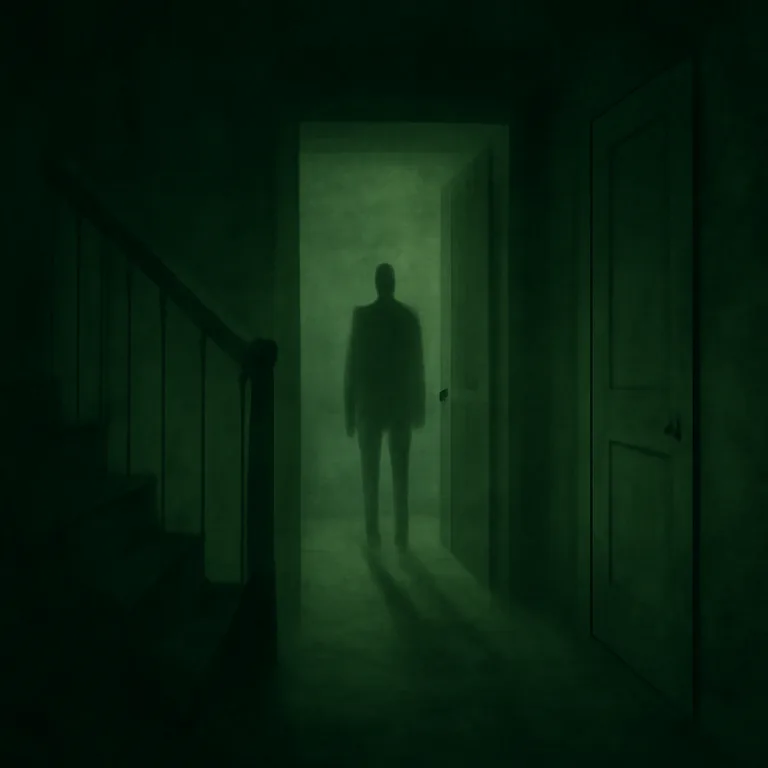
The House Listens
A lone tenant discovers a stalker in a quiet house and learns the building itself keeps a ledger of every passerby who enters its rooms.
A lone tenant discovers a stalker in a quiet house and learns the building itself keeps a ledger of every passerby who enters its rooms. I moved into the old house at the edge of town after the for-sale sign rusted to its pole and no one claimed it for weeks. It perched on a slope, windows like tired eyes, a door that squeaked in a way that sounded almost like a sigh. The previous owner left in the middle of a storm, a memory of rain and an unfinished casserole on the stove. The realtor called it charm; I called it a hinge waiting to come loose. In the first week I learned the house speaks in small noises,
Audio plays in the player below. Scroll to read the full transcript while you listen.
Rate this story
Hover a star to rate this story
About this story
A lone tenant discovers a stalker in a quiet house and learns the building itself keeps a ledger of every passerby who enters its rooms.
A lone tenant discovers a stalker in a quiet house and learns the building itself keeps a ledger of every passerby who enters its rooms. I moved into the old house at the edge of town after the for-sale sign rusted to its pole and no one claimed it for weeks. It perched on a slope, windows like tired eyes, a door that squeaked in a way that sounded almost like a sigh. The previous owner left in the middle of a storm, a memory of rain and an unfinished casserole on the stove. The realtor called it charm; I called it a hinge waiting to come loose. In the first week I learned the house speaks in small noises,
Transcript
Full text of the narration. Selecting text does not affect playback.
I moved into the old house at the edge of town after the for-sale sign rusted to its pole and no one claimed it for weeks. It perched on a slope, windows like tired eyes, a door that squeaked in a way that sounded almost like a sigh. The previous owner left in the middle of a storm, a memory of rain and an unfinished casserole on the stove. The realtor called it charm; I called it a hinge waiting to come loose. In the first week I learned the house speaks in small noises, the way rooms hold their breath when you turn the light off. On the second night I heard a sound that did not belong to the wood or the wind. It was careful, patient, as if someone were testing the limits of the floor boards. I told myself it was nothing, that houses do not break their own promises in one night. But the sound grew. I recalled the phrase that haunted the pamphlet: footsteps upstairs. I heard footsteps upstairs in the quiet of midnight and sat very still, listening as the steps climbed a rhythm of their own, a rhythm that did not match mine. The carpet there is thin, old and pale with the shade of years. I could remember when a pine floor carried the same sound for a family that pretended not to notice the spaces between their sentences. Here, the footsteps returned in the small hours, when the clock forgot its own hands and the room smelled of rain and old books. In the days that followed I kept a log in a notebook with a cracked spine. I marked dates, notes about drafts, about the way the air moved in the hall as if a warning had just passed through. One morning I found the kitchen door lying slightly ajar, but the door frame fit the door as if sealed there by some future accident. The latch sounded when I closed it, a little sigh that seemed personal, as if the house knew I would count the doors again. The next night I checked the windows, checked the knobs on every cupboard, even the ones that hide nothing. I slid into the living room and found another quiet sign of company: a chair pushed away from the table as though someone had recently risen. The sounds did not form a single story, but they wrote a ledger of somebody there, watching and waiting. every door locked. I reminded myself of those words in my head when the lights dimmed and the room grew louder than the clock. I would stand in the doorway to the kitchen and whisper to the empty room, telling the house to stop listening, to stop counting. And then, to my own surprise, the house replied with a breath of its own, the kind of sigh a creature makes when it decides to stop pretending it is not alive. One night I turned toward the hallway and heard a breath that did not come from me. It was a soft, contained sound, like someone holding a breath just behind the door before a judgment is announced. Behind me, a window rattled, a pane of glass that had slept through many storms rattled in its frame. I moved toward the source of the noise and found the air colder, as if the house had opened a shallow mouth somewhere and exhaled into the room. The temperature dropped to the shave of a memory and the air carried a scent I could not name, something cleaner than dirt and older than smoke. I followed the sound to the closet in the hall - the one where I store coats I never wear, the coats that carry the smell of long winters and spilled rain. My breath fogged the air as I stood there, listening. Then I heard breathing in the closet. The words did not come from the closet itself but from the space beyond, a voice that could not have been mine, a maker of shadows in a room that should have been filled with nothing but coats and the faint stench of moths. The phrase repeated in my mind like a warning bell that cannot be silenced. I stepped back and the closet door creaked shut, as if something inside had pressed a palm against the wood and declined to release it. For days I tried to pretend that the sounds were only my memory and the weather, that I was imagining. The house, though, offered its own counter argument in little ways. The kettle began boiling at odd hours, the sink ran for a moment without being touched, and when I finally found my own handwriting on the back of a page I had left blank earlier, I saw a line I did not write: a sentence about a man who wore the same shoes as mine and a stare that could not be closed. I began to notice the way the house kept a rhythm with the world outside. A car passed down the hill at exactly the wrong moment, and in the moment the sound faded, a branch tapped a window from the other side of the yard. I looked up and for a blink of time I saw a silhouette in the glass, a shadow that did not belong to me or to the trees. The silhouette did not move with the wind, and when it did shift it moved with such precision that it could have been a photograph that decided to escape its frame. The house seemed to learn this silhouette and provide him a new room in which to wait. I do not want to become a person who talks to walls, but the walls answer. They answer in the easiest way a house can: by withholding the ordinary, by turning to the side, by offering a smell that belongs to rain and old gasoline at once, a smell that feels like a trap in reverse. I began to suspect that someone was not just listening but listening with a plan, a map of every door and every corner of the building. One evening I stood at the top of the stairs and listened as the house counted out the minutes with a slow, patient cadence. footsteps upstairs again, as if the house itself had decided to test my nerves by inviting the sounds of an intruder that I could not see but could hear as clearly as my own heartbeat. I did not shout. There would be no bravado here, only the sound of breath escaping through lips that would not betray the truth of the house. I descended, then stopped, and listened to the quiet in the basement where the water pipes hummed with the same careful tempo that the upstairs steps had adopted. The house wanted to know if I would accept the presence with me or if I would fight against it. And then I found the letter. It rested on the kitchen table, a single page written in a handwriting that was not mine but which looked familiar enough to make me question memory itself. It spoke of patience, of staying where I stood, of a long enough corridor for a rumor to become a habit. The words did not threaten with violence but promised something else entirely: a room warmer than the cold of the night, a corner where I would not be alone. The sentence ended with a question I did not answer aloud but understood: would I stay? The phrases, repeated in the quiet spaces of the house, twisted into my own rhythms and my own fears.
Audio
The House Listens
ReflectStart here