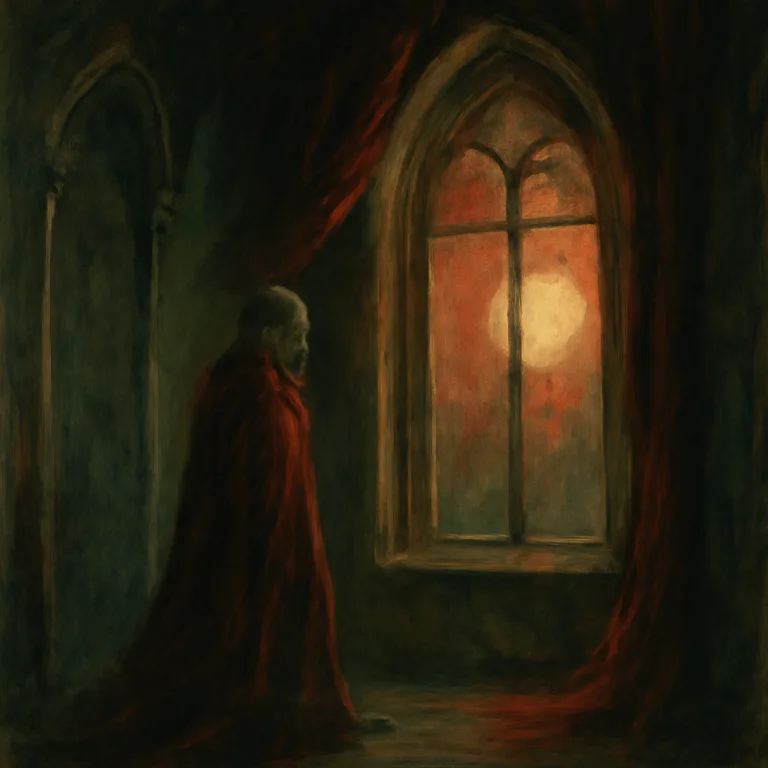
Dawn at the Threshold
A quiet morning unravels in a town that keeps its secrets tight, as a guest bound by old rules arrives and the day begins to bite at the edges of light.
A quiet morning unravels in a town that keeps its secrets tight, as a guest bound by old rules arrives and the day begins to bite at the edges of light. Morning in our town begins with the same slow sigh of a kettle and the same careful light through a narrow row of blinds. The street outside is pale and patient, as if the world itself is stirring against a distant clock. I do not rise with fanfare. I rise with the sense that something in the air would rather I stayed dreaming. The routine is simple: coffee grounds to the pot, water to the brim, the little ritual of letting the steam gather in the kitchen like a
Audio plays in the player below. Scroll to read the full transcript while you listen.
Rate this story
Hover a star to rate this story
About this story
A quiet morning unravels in a town that keeps its secrets tight, as a guest bound by old rules arrives and the day begins to bite at the edges of light.
A quiet morning unravels in a town that keeps its secrets tight, as a guest bound by old rules arrives and the day begins to bite at the edges of light. Morning in our town begins with the same slow sigh of a kettle and the same careful light through a narrow row of blinds. The street outside is pale and patient, as if the world itself is stirring against a distant clock. I do not rise with fanfare. I rise with the sense that something in the air would rather I stayed dreaming. The routine is simple: coffee grounds to the pot, water to the brim, the little ritual of letting the steam gather in the kitchen like a
Transcript
Full text of the narration. Selecting text does not affect playback.
Morning in our town begins with the same slow sigh of a kettle and the same careful light through a narrow row of blinds. The street outside is pale and patient, as if the world itself is stirring against a distant clock. I do not rise with fanfare. I rise with the sense that something in the air would rather I stayed dreaming. The routine is simple: coffee grounds to the pot, water to the brim, the little ritual of letting the steam gather in the kitchen like a soft breath you forget to exhale. I measure the day out in small habits and small noises, as if I could keep the morning from listening in on what I cannot name.
The house keeps its secrets behind the walls I have lived among for years. The floorboards wear their stories quiet, the wallpaper has a way of looking at you from corners you pretend not to notice. I tell myself these things with the affectionate patience of someone who has learned to live with a haunted hum at the edge of the room. If you listen too closely you can hear the house in a dozen small ways: the cupboard door that sticks when you want to put something away, the clock that ticks at a pace just a shade off, the way the door opens to admit a visitor and then seems to forget to close again. It is in these small irregularities that I first sense the day will not be ordinary.
I am a careful person with careful habits. My neighbors would call me steady, or perhaps stubbornly ordinary. I have learned to treat the morning as a guest who might leave behind a crumb of unease if I fail to acknowledge it. The kettle begins its breathy whistle, not a shout but a whisper, the kind of sound that makes you turn toward the door of your own life and wonder if someone is on the other side trying to tell you something you do not want to hear. When the steam curls above the cup I accept that I am listening to a story I have told myself so many times that I have convinced myself it is true. It is not until the doorbell rings that the morning truly begins to move with a strange, deliberate intention.
The doorbell is a sound you do not forget, a small metal voice that seems to come from the other side of a memory you cannot quite place. I drink the bitter coffee, set the mug down, and walk that short distance to the door with the gravity of someone who fears both what and who waits beyond it. The man on the other side is pale to the point of losing color in the light, with a cloak that has seen winters you cannot imagine. He stands there as if he has decided to stand in a painting until someone else notices him and what he intends to do with the space between us. He is the sort of visitor you tolerate only if you know you have the right to imagine a different exit. He does not ring again. He does not need permission. He simply is.
He says nothing for a long moment, letting the morning fill the space with the small, persistent sounds of a house waking. I watch, and I am careful with how I steer my eyes, because the world can tilt on the hinge of one calm gaze. Then he speaks, and the sound is a soft, old thing, like a hymn you have forgotten you learned as a child but still recognize in the way your own name drifts from a stranger’s mouth.
“I have come because I am told you understand the rules of entry,” he says, and there is a way he says it that feels like a hand taking hold of your sleeve and guiding you to a chair you did not mean to sit in. He has an air of being here for a particular purpose, and that purpose is kept behind the thin veil of courtesy that vampires in stories often wear as if it were a uniform. He mentions no names. He mentions weather and distance only as if to soften the fact that he has traveled into something you do not invite in and cannot send away simply by closing the door.
“Entry is not guaranteed,” I reply, choosing the phrase with care. The words feel old in my mouth, the way a prayer you once learned by rote can carry a new weight when you speak it aloud in a room that suddenly feels larger than it did. “And here, in this house, invitation matters.” I say invitation matters instead of invitation only, which is a more complete ache of a sentence, but I do not add the longer form. I do not need to. He nods as if this is exactly what he expected, which unsettles me more than any warning might have.
He steps closer, and for the first time I notice how the room seems to tilt toward him just a fraction. It is not the movement of a door opening but the sense that the floor is listening, waiting for something to happen. The rumor in our town is that the old castle on the hill has never really stood empty, that its windows blink at dawn with a light that is not sun and do not belong to even a human day. People speak of a line drawn long ago, a line that separates those who can walk through the world as themselves and those who must be invited to walk through other people’s thresholds. The visitor before me is not a rumor. He is the shape of an old rule wearing a modern face.
“I am no stranger to rules,” he says, and there is a note in his voice that makes me ask myself if I am the stranger, or if the house is, or perhaps the room between us has decided to turn sideways and watch us both from a corner that does not belong to either of us. He explains, as if I needed to know, that he keeps his bargains in the light that belongs to night only and does not belong to day at all. He speaks of a hunger that is patient, a hunger that has learned to wait inside a room until the morning places a lamp on a table and forgets to switch it off. He mentions the word no reflection by accident, and I feel a tremor in the bones of the house itself, as if the walls had suddenly remembered something they never told me before.
The words come in a quiet rug of sound, laid beneath the more common chatter of the kettle and the clock and a distant bird that does not quite sound right. The man’s story is not a confession but a pattern. It is the old pattern that humans tell themselves when they fear that something they do not understand is watching them from the edge of their own daylight. He claims to be a guest, a visitor in need, and that requires an invitation in a way that makes even the most stubborn part of me feel the weight of ancient etiquette pressing down on the skin of this room. They say there are thresholds that cannot be crossed without consent, thresholds that belong to the old world, thresholds that obedience demands be treated with a kind of ceremonial care. He does not push. He does not demand. He waits as if the moment itself will decide for him whether he will pass or stay.
He asks for water, for a seat at the table, for a moment of warmth that does not belong to him but may, if given, become the only warmth left in the room. The doorway, the clock, the glass on the counter - all of them seem to lean toward him with the polite gravity of a jury listening to a case that has not yet been proved. And I remember the rules I have lived by for years: keep to the daylight; do not invite what you cannot watch; do not let fear shape your steps; and most of all, do not forget that a thing can be kept at bay only if you remember to close the door after it leaves. The man takes a chair as if he has never learned to stand anywhere else, as if chairs were a memory he carries from a past where he did not have to learn to be careful around thresholds.
The morning continues to uncoil in its own patient way. I bring him tea, though he does not drink it, and I speak to him as one would speak to a guest who is a shade too pale for comfort only because you insist on politeness when you are trying not to show fear. He tells stories of long roads, of cold evenings, of the feeling of being watched by things that do not have eyes in the sense that humans use the word. There is a distant tremor in his voice when he admits how tired he is of waiting for something to change, how tired he is of being the same shape in a world that refuses to forget him. He is older than the room holds, older than the town, older than the rules that hold him at bay. He has learned a patient, exact way of asking for what he needs, a way that is almost a ritual in itself. And I am reminded that this is a morning episode not because of the time on the clock but because the day begins with a dull, insistent ache at the edge of every ordinary thing - like a letter you know is there but you do not want to open.
We talk of nothing of consequence, and yet every sentence feels loaded with consequences that are not of the here and now. He speaks of the house as if it were a living thing with a memory so deep that it can still recall the footsteps of guests who came when the world was young. He speaks of doors that can be both portals and traps and of the rule that insists on invitation for entry. He speaks of a world in which to be seen is to be judged by a jury that never sleeps. It is all so thin and careful that I could mistake it for weather or a trick of the light if the air did not feel so heavy with purpose. The conversation drifts, and I notice a detail I would rather not notice: there is a moment when his eyes lose their color for a breath and then return as if nothing happened. It is not a trick of the light but a sign I cannot ignore. The house seems to lean closer, listening as if the walls themselves hold their breath to hear what comes next.
Then the mirror is the first witnesses to something I was not prepared to see. I go to the hallway and catch a glimpse of myself in a wall-mounted mirror, a strange, accidental antique that I keep for the way it catches the early sun. My reflection - if I am allowed to have one - does not appear. There is only the pale, glassy surface of the room-lit space, a silence where my own face should be. A memory of a face I cannot call to mind stares back at me from the glass, a memory not mine, and I am suddenly aware of a term I have avoided because I did not want to admit its truth: no reflection.
Audio
Dawn at the Threshold
ReflectStart here